
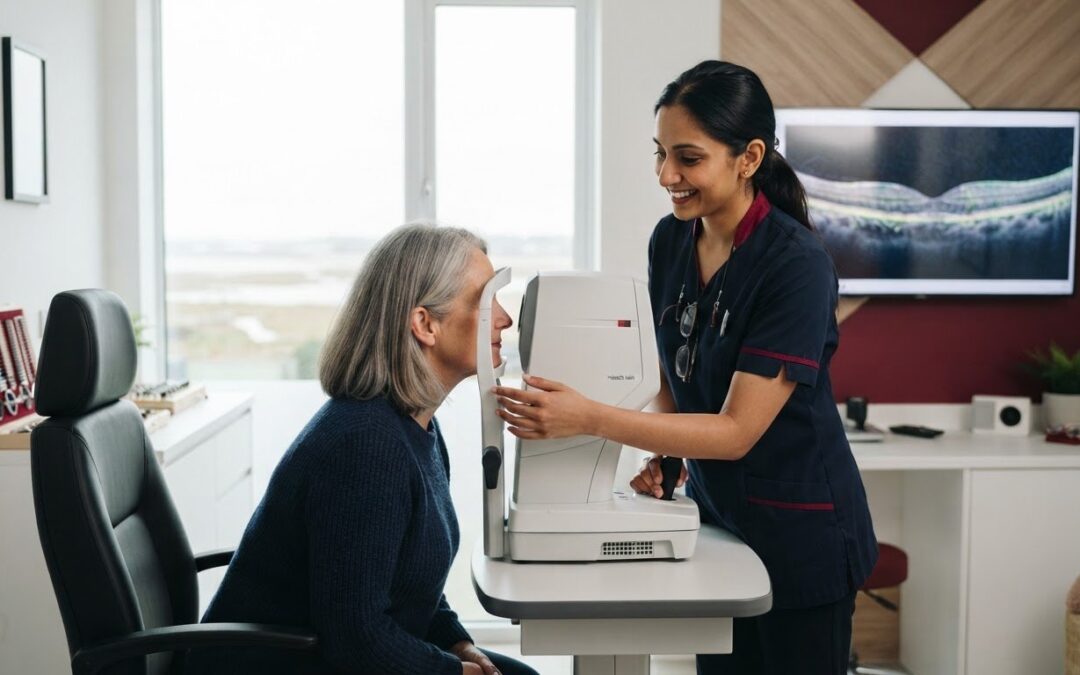
Could a scan show details of your eye that a standard sight test doesn’t? An oct eye test uses light to create detailed images of structures at the back of the eye, including the retina and optic nerve. It can add useful information to an assessment, but it isn’t a replacement for a comprehensive eye examination.
It’s natural to wonder what OCT stands for, whether the scan will feel uncomfortable and whether you need one if you already have regular eye tests. The scan is non-invasive: the equipment doesn’t touch your eye, and it’s generally quick and painless. Your optometrist can explain what the images show, what they don’t establish on their own and whether any further checks are appropriate.
In this guide, you’ll learn how OCT differs from a sight test, what to expect during an appointment and which questions to ask about results and follow-up. If you’re looking for eye care in South Essex, Castle Opticians is an independent practice with branches in Rayleigh and South Benfleet, offering comprehensive NHS and private eye examinations. Ask your preferred branch whether OCT scanning is available and how it fits into an examination. This is also a useful first question if you’re travelling from Benfleet or Canvey Island.
Key Takeaways
- Learn what the layers of the retina and other eye structures may reveal in an OCT scan, and why images need professional interpretation.
- See how an oct eye test complements a standard eye examination rather than replacing checks of vision and overall eye health.
- Find out what may happen during an OCT appointment, with the process varying according to the equipment and practice.
- Use a simple sequence to raise vision concerns with an optometrist and ask whether OCT is appropriate for you.
- Discover what to check when seeking advice in Rayleigh or South Benfleet, including whether OCT scanning is available alongside an eye examination.
What is an OCT eye test and how does it differ?
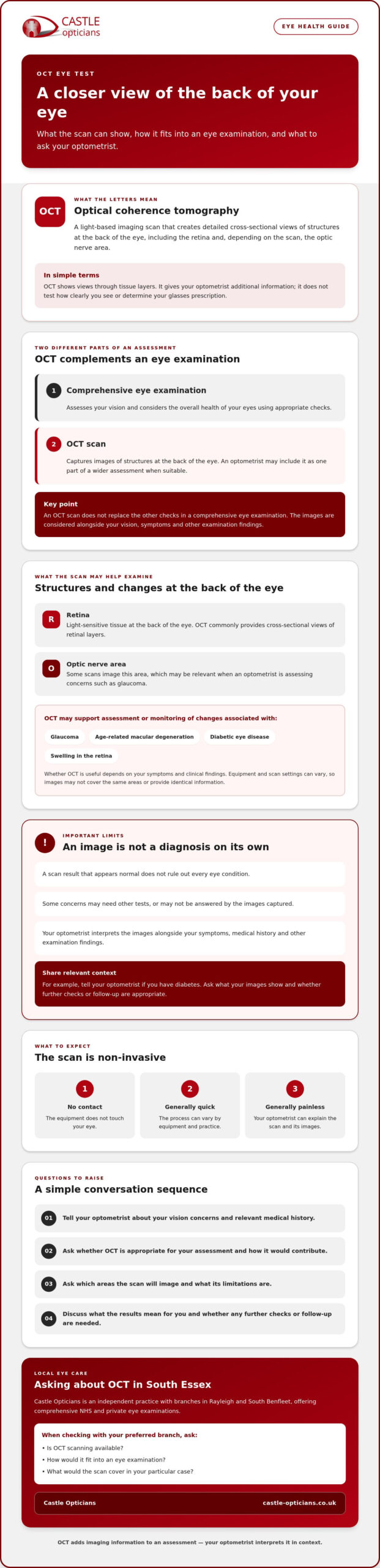
An OCT eye test uses optical coherence tomography, a light-based imaging technique, to create detailed cross-sectional views of structures at the back of the eye. Unlike a vision chart, it doesn’t measure how clearly you can see. Instead, it helps an optometrist examine layers of the retina and other relevant structures, such as the optic nerve. The Optical coherence tomography overview explains more about the technology and its use.
Think of the images as views through the pages of a book: they show individual layers, rather than a photograph of the whole eye. This can give the clinician information that isn’t available from a vision chart alone. The images still need to be interpreted in context, alongside your symptoms and other examination findings.
What does OCT stand for in an eye test?
OCT stands for optical coherence tomography. The scan uses reflected light to build cross-sectional images, allowing an optometrist to look at the arrangement and appearance of tissue layers. It doesn’t test your eyesight or determine your glasses prescription. Those are assessed in other parts of an eye examination.
Is an OCT scan the same as a routine eye examination?
No. A routine eye examination assesses your vision and considers the health of your eyes using appropriate checks. OCT is an imaging scan that may be included as one part of a wider assessment when the optometrist considers it suitable. It doesn’t replace the other checks involved in an examination.
An OCT scan complements a comprehensive eye examination; it doesn’t replace one. Your optometrist considers scan images alongside your symptoms, vision and other examination results. An image alone can’t provide the full picture or guarantee that a condition is diagnosed or ruled out.
If you’re unsure what a comprehensive appointment involves, read this guide to the comprehensive eye test. Understanding how the different parts fit together can help you ask informed questions, including whether OCT is appropriate for your needs.
What can an OCT eye scan show, and what are its limits?
An OCT scan gives an optometrist a close view of tissue layers at the back of the eye. Depending on the equipment and scan performed, images may include the retina, which detects light, and the optic nerve, which carries visual information to the brain. Different devices and scan settings don’t necessarily show the same areas or provide identical information.
These images can support the assessment or monitoring of some eye conditions. For example, OCT may help a clinician examine changes associated with glaucoma, age-related macular degeneration, diabetic eye disease or swelling in the retina. The American Academy of Ophthalmology explains how OCT is used to assess eye structures and conditions. Whether it’s useful in an individual case depends on the person’s symptoms and clinical findings.
Which parts of the eye may an OCT scan image?
The scan commonly provides cross-sectional views of retinal layers. The retina is the light-sensitive tissue lining the back of the eye. Some scans also show the optic nerve area, which is relevant when an optometrist is assessing concerns such as glaucoma. The exact structures visible depend on the scan and equipment, so ask what your particular images cover.
What can an OCT scan not tell you on its own?
An OCT image can inform an assessment, but it cannot provide a diagnosis in isolation. It doesn’t replace an optometrist’s examination, and a result that appears normal doesn’t rule out every eye condition. Some problems may need other tests or may not be answered by the images captured.
Your optometrist interprets the scan alongside your symptoms, medical history and other examination findings. If you have diabetes, for instance, mention it during your appointment; it provides relevant context for assessing your eye health. The clinician will explain what the images mean for you and decide whether further checks or follow-up are appropriate. If the scan and your symptoms don’t seem to tell the same story, ask what that means and whether anything else should be considered.
If you’re considering an oct eye test, ask how it would contribute to your assessment, which areas it will image and what its limitations are. Discussing your concerns can help establish whether it’s suitable, rather than treating the scan as a stand-alone answer. For a personal discussion as part of a comprehensive eye examination, contact Castle Opticians in South Essex and check whether OCT is available at the branch you plan to visit.
OCT scan vs standard eye test: what should you expect?
A standard eye test and an OCT scan provide different kinds of information. A sight test assesses how well you see and forms part of a broader check of your eye health. OCT adds images of internal eye structures when the optometrist considers them useful. The American Academy of Ophthalmology explains OCT as an imaging test that can help clinicians assess eye conditions.
| Aspect | Standard eye examination | OCT scan |
|---|---|---|
| Purpose | Checks vision and assesses eye health using appropriate examination methods. | Produces cross-sectional images of selected structures inside the eye. |
| What happens | The optometrist carries out relevant checks and may ask about your vision, symptoms and health history. | You may be asked to position yourself at an imaging instrument and follow the operator’s instructions. |
| How results are used | Findings help the optometrist consider your vision and overall eye health. | Images may add information to the wider assessment and are interpreted alongside other findings. |
What happens during an OCT eye scan?
The exact process depends on the equipment and the practice. Typically, you’ll be guided to sit at the instrument and asked to look towards a target or keep still while images are taken. OCT is non-invasive: the scanner uses light and doesn’t need to touch your eye. Follow the practice’s instructions, and ask in advance about preparation, appointment arrangements or any accessibility and support needs.
Don’t assume an OCT scan is automatically included with an eye examination. Check with the practice whether it’s available, whether it’s appropriate for you and how it fits into the appointment. If you wear contact lenses or have a particular concern, mention it when asking what to expect.
How does OCT fit into a full eye examination?
An OCT scan may provide extra information, but it’s only one possible element of the assessment. The optometrist decides whether imaging is relevant to your circumstances and interprets it alongside your symptoms, medical history and other examination results. The scan doesn’t replace checks of vision or a clinician’s judgement.
For a broader explanation of the checks that may form part of an appointment, see this eye health check guide. Before attending, ask your chosen practice what the appointment involves and whether any specific preparation is needed.
How to decide whether to ask about an OCT eye test
Start with what you’ve noticed, not with a particular scan in mind. If your vision has changed or you have an eye concern, contact an optometrist for advice and arrange an appropriate examination. Explain what’s happening, when it began and whether it has changed. The optometrist can assess your needs and discuss whether OCT would add useful information.
Your optometrist, not you alone, decides whether OCT is appropriate for your circumstances. A scan may not be needed, or another check may be more useful. Don’t delay seeking advice about a sudden or severe change in vision while trying to book an OCT scan. Seek prompt clinical advice instead.
- Describe your symptoms or concerns.
- Attend an eye examination so your vision and eye health can be assessed.
- Ask whether OCT is suitable and how it could inform your care.
What should you tell the optometrist before a scan?
Share any symptoms, previous eye diagnoses and changes in your vision, even if they seem minor. Mention relevant health conditions and medicines, as these may help the optometrist understand your circumstances. Bring your glasses or appointment details if the practice asks you to. If you’re unsure what information is useful, explain what has changed and let the optometrist guide the conversation.
What questions should you ask before booking?
A quick call can clarify whether the practice offers OCT and whether it may be relevant to your concern. Ask how scanning fits alongside an eye examination, how the optometrist will explain the results, and what appointment arrangements or fees apply. Availability and arrangements vary, so check directly rather than assuming an OCT scan is included.
- Is OCT available at this practice, and might it suit my concern?
- Is it offered alongside an eye examination, or arranged separately?
- How will the images and findings be explained to me?
- Do I need to prepare or bring anything, and are there any fees?
Castle Opticians offers comprehensive NHS and private eye examinations at its branches in Rayleigh and South Benfleet. Check directly with the practice about OCT availability and arrangements. To discuss an eye examination and what may be appropriate for you, contact Castle Opticians about an eye test.
Where to ask about an OCT eye test in Rayleigh or South Benfleet
If you’re looking for an OCT eye test locally, Castle Opticians is an independent South Essex opticians group with branches in Rayleigh and South Benfleet. The practice offers comprehensive NHS and private eye examinations. Check directly whether OCT scanning is available at your preferred branch before making an appointment. If you’re in Benfleet or Canvey Island, ask which location and appointment options may suit your needs.
How to check whether OCT is available locally
Contact your preferred branch and ask clear, practical questions. Availability and appointment arrangements can vary, so don’t assume a scan is included in an eye examination or offered at both locations.
- Is OCT scanning currently available at this branch?
- Could it be offered alongside an eye examination, or would it need a separate arrangement?
- Is an examination recommended before deciding whether a scan would be useful?
- What appointment arrangements apply, and are there any fees?
Ask how the optometrist will explain the images and findings, too. NHS or private examination options don’t by themselves confirm whether OCT is available or how scanning is arranged. The practice can clarify what applies to your circumstances.
What to do after your appointment
After an examination or scan, ask the optometrist to explain any relevant findings in plain language. You might ask what the images show, how they relate to your symptoms and whether any further checks are recommended. Follow the review or referral plan given by your eye-care professional, and ask if anything is unclear.
For broader information about the checks that may form part of an appointment, read the Essex eye health check guide. A scan is one possible source of information, not a substitute for a full assessment and personalised advice.
For a local conversation about an eye examination and to check OCT availability or appointment options, contact Castle Opticians to ask about an eye examination.
Take the next step towards clearer eye-care advice
An OCT eye test can provide detailed images of structures at the back of the eye, but it doesn’t measure eyesight on its own or replace a comprehensive eye examination. The optometrist decides whether imaging is appropriate and interprets it alongside your symptoms and other findings. If your vision has changed or you have concerns, start by discussing them with an optometrist.
For local advice, Castle Opticians is an independent South Essex practice with branches in Rayleigh and South Benfleet. It offers comprehensive NHS and private eye examinations. Ask your preferred branch whether OCT scanning is offered and how it can fit into an appointment. This is a practical first step for people in Rayleigh, Benfleet and Canvey Island who want to discuss an eye concern.
Contact Castle Opticians to ask about an eye examination and raise any questions about your vision or eye health. A conversation with an optometrist can help you understand the options and decide on a suitable next step.
Frequently Asked Questions
What is an OCT eye test?
An OCT eye test uses optical coherence tomography, a scan that uses light to create cross-sectional images of structures inside the eye. It can help an optometrist examine layers of the retina and, depending on the equipment, other areas such as the optic nerve. It doesn’t measure your eyesight or replace an eye examination. The optometrist interprets the images alongside your symptoms and other findings.
Is an OCT scan the same as a normal eye test?
No. A standard eye examination assesses your vision and broader eye health through relevant checks. An OCT scan adds images of selected internal structures, if the optometrist considers it useful. It’s one possible part of a wider assessment, not a replacement for the examination. Your optometrist considers scan results together with your symptoms, health history and other findings when advising you.
What can an OCT scan detect or show?
An OCT scan shows cross-sectional images of structures such as retinal layers, and may include the optic nerve area depending on the equipment and scan. These images can help an optometrist assess or monitor changes associated with conditions such as glaucoma, age-related macular degeneration or diabetic eye disease. An image doesn’t diagnose a condition by itself, and a normal scan doesn’t rule out every eye problem. Your clinician interprets it in context.
Is an OCT eye scan uncomfortable?
An OCT scan is generally painless and non-invasive. You’ll usually sit at an imaging instrument and follow the operator’s instructions while images are taken; the equipment uses light and doesn’t touch your eye. The precise process can vary with the device and practice. If you’re worried about the scan, or need help with positioning or accessibility, tell the practice before your appointment so they can explain what to expect.
How long does an OCT eye test take?
The scan itself usually takes a few minutes, although the time can vary with the equipment and the images needed. If OCT is part of a wider eye examination, allow for the appointment as a whole, not just the scan. Ask the practice how long to set aside and whether OCT is offered alongside the examination or needs separate arrangements. Your optometrist can explain the process at your appointment.
Is an OCT scan included in an NHS eye test?
OCT scanning isn’t routinely included in a standard NHS sight test. It may be used in hospital eye clinics to monitor specific conditions, but availability depends on the service and your circumstances. Don’t assume that an NHS-funded examination includes OCT. Ask the practice directly whether scanning is available, whether it’s appropriate for you and how it would be arranged. The optometrist can advise whether imaging may add useful information to your assessment.
Can I book an OCT eye test in Rayleigh or South Benfleet?
Castle Opticians has branches in Rayleigh and South Benfleet and offers comprehensive NHS and private eye examinations. Contact your preferred branch to check whether OCT scanning is available and ask about appointment options. If you’re in Benfleet or Canvey Island, ask which location is suitable for your needs. You can also discuss whether an eye examination is the right first step for your concern.