
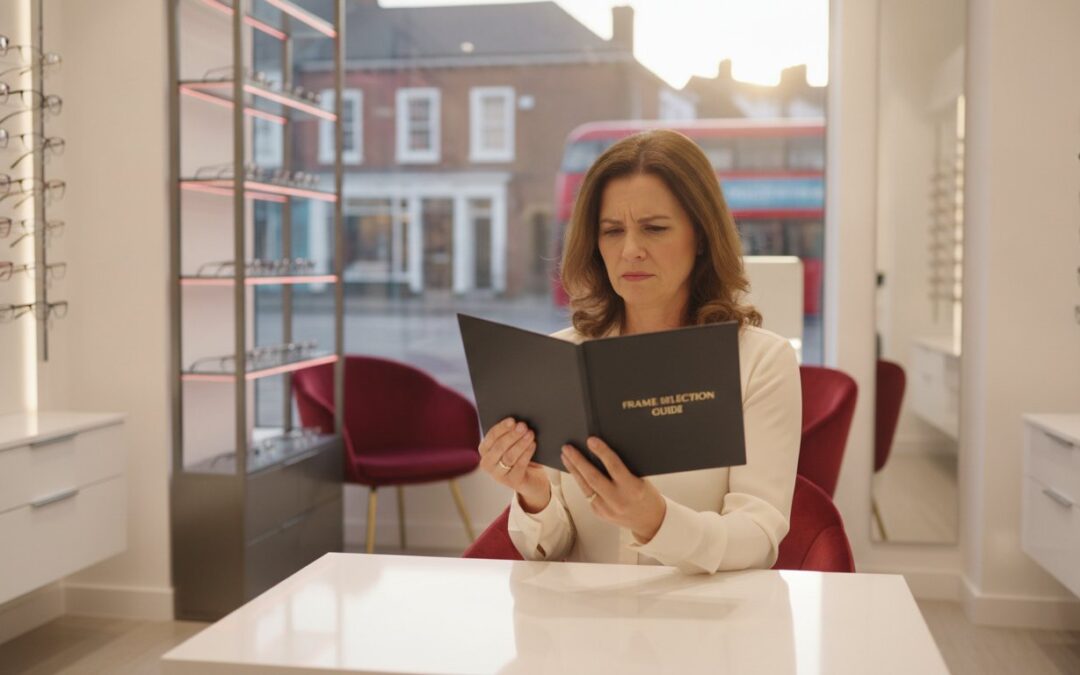
Have you found yourself holding a menu at arm’s length or constantly swapping between your reading glasses and your distance pair just to check a price tag? It’s a common frustration that often leads many of our visitors to ask: “do I need varifocals?”
We understand how tiring it is to manage multiple sets of frames, especially when you’re straining to see your computer screen or experiencing headaches after a long afternoon of close-up work. It’s a significant change to your daily routine; it’s natural to want a solution that feels both professional and personal. You aren’t alone in wanting a more seamless way to go about your day without the constant “on-and-off” dance of different spectacles.
You deserve a vision solution that keeps up with your lifestyle rather than slowing it down. The good news is that modern lens technology has evolved to match your busy pace, offering a clear path back to comfortable, all-in-one vision.
This article will walk you through five tell-tale signs that your eyes are ready for an upgrade. We’ll also explain why bespoke varifocal lenses might be the most convenient and comfortable choice for restoring the effortless clarity you’ve been missing.
Key Takeaways
- Recognise the tell-tale signs of vision changes, such as holding reading material at arm’s length or feeling strain after using a computer.
- Understand why presbyopia is a natural shift in your eye’s focus and how it affects everyone regardless of their previous vision quality.
- Compare the convenience of all-in-one lenses against the hassle of multiple pairs to help you decide: “do I need varifocals?”
- Learn practical techniques for a smooth transition to your new lenses, including the simple “point with your nose” method for clear sight.
- Discover the value of bespoke measurements and personalised care at your local independent optician for a perfect, comfortable fit.
Recognising the Signs: Is Your Vision Changing?
It often starts with a subtle squint. You might notice that the text on your phone looks a little fuzzy, so you instinctively move your hand further away to find a clearer focus. This physical stretch, often called the “trombone effect”, is one of the most common reasons visitors come into our Rayleigh or Benfleet practices asking: “do I need varifocals?”
Whilst moving objects further away provides a temporary fix, it’s an exhausting way to navigate your day. Your eyes are muscles, and when they can no longer easily adjust between different distances, they overwork. This leads to a distinct sense of physical fatigue. You might experience a “heavy” feeling in your eyes or a dull tension across your brow after a morning spent at the computer. These frequent headaches are a clear signal from your body that your current eyewear is no longer providing the support you require.
There is also the practical frustration often referred to as the “two-pair faff”. If you find yourself constantly swapping between your distance spectacles for driving and your reading glasses for checking a text message, you’re likely feeling the strain. This constant juggling isn’t just a minor annoyance; it’s a disruption to your natural rhythm. You may also find that you are suddenly reliant on bright, direct light to see small print clearly, even when the room seems perfectly well-lit to everyone else.
The Frustration of Intermediate Vision
Many people don’t realise that vision isn’t just about “near” and “far”. There is a vast “middle ground” that is equally important. You might find it increasingly difficult to see your car dashboard whilst driving, or notice that supermarket shelves at eye level appear blurry. Desktop computer screens often sit in this intermediate zone, making it difficult to find a comfortable head position when using standard single vision lenses. This “no man’s land” of vision is where varifocals truly excel, providing a smooth transition across all distances.
When Single Vision Lenses Aren’t Enough
If you already wear glasses, you might feel like your current prescription is suddenly “wrong”. Your distance vision might still be sharp, but tasks that used to be easy, like reading a recipe or checking a watch, now feel like a struggle. You are transitioning from needing glasses for specific tasks to needing them for almost everything you do. The moment a patient usually realises they need a multifocal solution is when the frustration of missing out on the details of their world finally outweighs the habit of simply making do. When your single vision lenses start to limit your lifestyle, it is time to consider a more versatile alternative.
Understanding Presbyopia: Why Vision Shifts After 40
If you have noticed that reading the morning paper or checking a text message has become a struggle, you are experiencing a perfectly natural change in your ocular health. This shift is known as presbyopia. It is not a disease or a sign that your eyes are “failing”. Instead, it is a standard part of the ageing process that typically begins to manifest once we reach our 40s. Many of our visitors in Rayleigh and Benfleet start to wonder, “do I need varifocals?” when they realise their eyes can no longer “zoom” as effectively as they once did.
Inside your eye sits the crystalline lens. In our younger years, this lens is incredibly flexible, changing shape instantly to help us focus on objects up close. As we age, this lens gradually loses its elasticity and becomes firmer. The ciliary muscles, which help the lens change shape, find it harder to do their job. This happens to everyone. Whether you have had perfect 20/20 vision your whole life or have worn spectacles for years, presbyopia is an equal-opportunity change.
It is important to distinguish this from being long-sighted (hyperopia). Long-sightedness is usually caused by the physical shape of the eye, often being too short from front to back. Presbyopia, however, is specifically about the flexibility of the lens. This is why you might find your distance vision remains sharp whilst your near vision begins to blur. Varifocal technology is designed to mimic the natural, fluid focus your eyes once had by providing a range of different powers within a single lens.
The Science of the Seamless Lens
Varifocals are a triumph of modern optical engineering. Unlike traditional lenses, they incorporate three distinct prescriptions into one. The top portion is for distance, the middle for intermediate tasks like looking at a car dashboard, and the bottom for close-up reading. Because the power changes gradually, there is no “image jump”. This is the jarring sensation often felt with bifocals when the vision suddenly leaps between two different powers. Instead, you enjoy a smooth “corridor of vision” that feels much more natural.
Common Myths About Varifocals
There are several misconceptions that can make people hesitant to upgrade. One common myth is that varifocals have a visible line across the centre. In reality, they look identical to single-vision lenses. No one will know you are wearing multifocals unless you tell them. Another worry is that you cannot drive in them. This is simply not true. The top section of the lens is dedicated to clear distance vision, making them excellent for the road. To get a clear picture of how your eyes are changing, a Comprehensive Eye Health Check in Essex is the best place to start. If you are feeling unsure about your vision, we recommend booking a chat with our friendly team to explore your options.
Varifocals vs. The Alternatives: Which is Right for You?
Choosing the right way to manage your changing vision is a personal decision that depends heavily on your daily routine. When you find yourself asking, “do I need varifocals?” you are often comparing them to the traditional alternatives: bifocals or keeping two separate pairs of spectacles. Whilst each option has its place, the shift in modern optometry is firmly towards the seamless convenience of the varifocal lens.
Bifocals, once the standard for multifocal vision, have seen a steady decline in popularity amongst our visitors. This is largely due to the visible horizontal line across the lens and the jarring “image jump” as your eyes move between distances. More importantly, bifocals lack a dedicated intermediate zone. This middle-distance area is essential for tasks like viewing a car dashboard or a computer screen. In contrast, varifocals provide a natural transition that better suits our modern, screen-heavy lives, allowing you to move from your phone to the television without a second thought.
Your choice should reflect your daily activities. If you spend your day driving or working in an office, the ability to see at all distances without physical interruption is a significant benefit. Single-vision lenses are excellent for specific, prolonged tasks, but they rarely offer the versatility required for a busy lifestyle.
The “Two-Pair” Struggle
Many people initially opt for two separate pairs: one for distance and one for reading. However, the “two-pair faff” quickly becomes a source of frustration. Constantly swapping frames whilst out and about in Rayleigh or Benfleet increases the risk of misplacing your glasses or, worse, damaging a pair left in a pocket. Carrying two bulky cases everywhere is inconvenient, and many find that the cumulative cost of two high-quality frames and lenses often matches a single, bespoke pair of varifocals. For most, the long-term investment in one versatile pair offers far greater value and daily peace of mind.
Varifocal Contact Lenses: An Alternative Option
If you prefer the freedom of not wearing frames at all, you might be surprised to learn that varifocal technology is available in contact lenses too. Multifocal contact lenses work by incorporating multiple zones of power, allowing your brain to naturally select the focus you need for near, far, or intermediate distances. This is a fantastic option for active individuals or those who simply enjoy an “all-round” field of vision without the physical presence of spectacles. You can find more details in our Contact Lenses in Rayleigh guide. Whether you choose frames or contacts, the goal is to find a solution that feels like a natural extension of your lifestyle.
The Transition: Adapting to Your New Varifocal Lenses
Starting your journey with new lenses is an exciting step towards clearer vision, but it does require a short period of patience. If you have spent weeks asking “do I need varifocals”, the first few days of wearing them might feel slightly unusual. Your brain needs time to learn how to automatically navigate the three distinct zones of your new lenses. In the first 48 hours, it is common to notice a slight “swaying” sensation as you move your head. This is simply your neural pathways adjusting to the new way of receiving visual information.
Safety is a priority during this first week. Be particularly mindful when navigating stairs or kerbs. Because the lower portion of the lens is specialised for near vision, looking down at your feet through that section can make the ground appear slightly blurred or closer than it actually is. To stay steady, simply tuck your chin in towards your chest. This allows you to look through the top distance portion of the lens, keeping the floor in sharp focus.
The success of your transition often depends on the quality of the initial fit. This is why professional dispensing is so critical. Our team takes bespoke measurements of your pupillary distance and the specific heights at which your eyes sit within your chosen frames. When these measurements are precise, the “corridor” of vision aligns perfectly with your natural gaze, significantly reducing the time it takes to feel comfortable. To ensure your lenses are perfectly aligned for your face, book a consultation with our dispensing team today.
Top Tips for New Varifocal Wearers
Consistency is the most effective way to train your brain. Wear your new spectacles from the moment you wake up until you go to bed, even if you feel tempted to switch back to your old single-vision pairs. If you work at a desk, try lowering your computer monitor slightly. This ensures you are looking through the intermediate zone of the lens rather than the distance portion.
The most important habit to learn is the “point with your nose” technique. Unlike single-vision lenses, where you can flick your eyes to the side to see, varifocals require you to move your head. Imagine your nose is a laser pointer; always point it directly at the object you wish to see to ensure you are looking through the clearest part of the lens.
What if I Can’t Get Used to Them?
Whilst the vast majority of people adapt within a fortnight, we understand that some may feel apprehensive. As an independent practice, we offer a “non-tolerance” guarantee for your peace of mind. Often, a tiny adjustment to the tilt of the frame or the bridge of the nose can transform your clarity. If your vision doesn’t feel natural after two weeks of consistent wear, please return to us for a re-check. We are here to ensure your transition is as smooth and unhurried as possible.
Expert Varifocal Consultations in Rayleigh and Benfleet
Whilst identifying the physical signs of presbyopia is the first step, the definitive answer to “do I need varifocals” requires a professional, clinical assessment. Unlike online retailers who may suggest ordering multifocal lenses via a webcam, we believe that high-quality vision requires a physical, in-person touch. Varifocal lenses are sophisticated pieces of optical technology. They rely on millimetre-perfect alignment to function correctly, and this level of precision can only be achieved through a face-to-face consultation.
When you visit our independent practices, our dispensing opticians take bespoke measurements that simply cannot be replicated at home. We measure your pupillary distance, which is the exact space between your pupils, alongside the vertical “heights” where your eyes sit within your chosen frame. If these measurements are incorrect by even a tiny margin, the “corridor” of vision will not line up with your pupils. This often results in the blurriness or “swaying” sensations that people mistakenly associate with varifocals themselves, rather than a poor fit.
Our role as your trusted local expert is to ensure that your new lenses feel like a natural extension of your eyes. By taking the time to understand your hobbies, your work environment, and how you use your vision daily, we can recommend a lens design that truly fits your life.
Professional Clinical Care at Castle Opticians
We pride ourselves on providing a thorough, unhurried experience that prioritises your ocular health. Our standard eye examinations last for 30 minutes, giving our optometrists ample time to conduct a comprehensive health check alongside your sight test. We offer both private and NHS eye tests at our Rayleigh and South Benfleet branches, ensuring that high-quality care is accessible to everyone in our community. Once your prescription is finalised, our dispensing team will guide you through the various lens designs available, ensuring they are perfectly suited to your chosen frames.
Finding the right look is just as important as the lenses themselves. You can explore our wide range of independent and designer styles in our guide to spectacle frames Rayleigh. We believe that your spectacles should be something you feel proud to wear every day.
Book Your Consultation Today
If you are ready to leave behind the frustration of swapping between different pairs of glasses, our team is here to help. We have been providing personalised, hospitality-led service to the South Essex community since 1989. We understand that changing your vision can feel like a big step, and we are committed to making the process as comfortable and reassuring as possible.
To begin, simply contact our practices in Rayleigh or South Benfleet to arrange an appointment. When you visit, please bring your current spectacles and any recent prescriptions with you. We look forward to welcoming you and helping you rediscover the clarity and convenience of seamless vision.
Take the Next Step Toward Clearer Vision
Understanding the changes in your eyesight is the first step toward reclaiming your daily visual comfort. Whether you have noticed the “trombone effect” when reading or are tired of the constant juggle between different spectacles, the question of “do I need varifocals” is best answered through a personalised consultation. By choosing a solution that adapts to your specific lifestyle, you can enjoy seamless focus across all distances without compromise.
At Castle Opticians, we have been serving our community as independent eye care specialists since 1989. Our team provides expert lens dispensing in Rayleigh and South Benfleet, ensuring every pair of varifocals is tailored precisely to your unique facial measurements for the most comfortable fit possible. We offer both NHS and private eye examinations, delivered with the unhurried care and hospitality that our visitors have come to trust over the decades.
Book your comprehensive eye test at Castle Opticians today and let us help you find the perfect vision solution. You don’t have to navigate these changes alone; our experts are here to ensure you see the world clearly and comfortably once again.
Frequently Asked Questions
How much do varifocals cost compared to single-vision lenses?
Varifocals generally represent a higher initial investment than single-vision lenses because they require a more complex manufacturing process to blend three prescriptions into one. The technology used to create a seamless transition between distances is more advanced than the fixed focus of a standard lens. Many of our visitors find that the cost is comparable to buying two separate high-quality pairs, with the added benefit of significantly better daily convenience.
Can I get varifocals on the NHS if I qualify for a voucher?
Yes, you can use an NHS optical voucher towards the cost of varifocals if you meet the standard eligibility criteria for help with spectacles. The voucher provides a set contribution based on your prescription requirements, which can be deducted from the total price of your multifocal lenses. Our team at Rayleigh or South Benfleet can help you confirm your current eligibility and explain how the voucher system works during your visit.
Are varifocals better than bifocals?
Varifocals are typically considered superior for modern lifestyles because they include an intermediate zone for computer work and car dashboards. Bifocals only provide focus for near and far distances, leaving a “gap” in the middle, and they feature a visible line that some find aesthetically unappealing. Varifocals offer a more natural visual experience without the jarring “image jump” associated with traditional bifocal designs.
How long does it realistically take to get used to varifocals?
Most people adapt to their new lenses within a few days, though it can take up to two weeks for the brain to fully automate the new way of seeing. If you are still wondering “do I need varifocals” because of the adjustment period, it’s worth noting that consistent wear is the key to success. Wearing them from morning until night helps your neural pathways adjust much faster than swapping back to your old glasses.
Can I drive immediately after getting new varifocal glasses?
We recommend waiting until you feel fully confident and comfortable with the lenses in a stationary environment before you drive. Whilst the top portion of the lens is dedicated to distance, the slight changes in your peripheral vision can affect depth perception during the first few days. It’s best to practise wearing them whilst walking around your home or local area before getting behind the wheel for the first time.
Do I need a different type of varifocal for computer work?
Standard varifocals are excellent for general use, but those who spend over five hours a day at a screen might benefit from “occupational” or office lenses. These are a specialised type of varifocal that prioritises the intermediate and near zones, providing a much wider field of view for desktop monitors. If your primary struggle is screen-based, our dispensing opticians can discuss whether this specific lens design is right for your desk setup.
What happens if I simply cannot adapt to varifocal lenses?
In the rare instance that you cannot settle into your new lenses after a consistent two-week trial, we provide a non-tolerance guarantee. This means we will re-evaluate your prescription and the fit of your frames to find a solution. If a change is required, we can swap the lenses for an alternative, such as separate pairs or bifocals, to ensure you have functional vision that you feel comfortable with.
Are there different qualities of varifocal lenses available?
There are several tiers of technology, ranging from “standard” designs to premium, bespoke lenses that are tailored to your exact eye movements. Higher-quality lenses use digital surfacing to reduce the soft blur at the edges of the frame, providing a wider “corridor” of clear vision. When asking “do I need varifocals”, it’s helpful to consider that premium designs often make the initial adaptation process much smoother and more intuitive.