

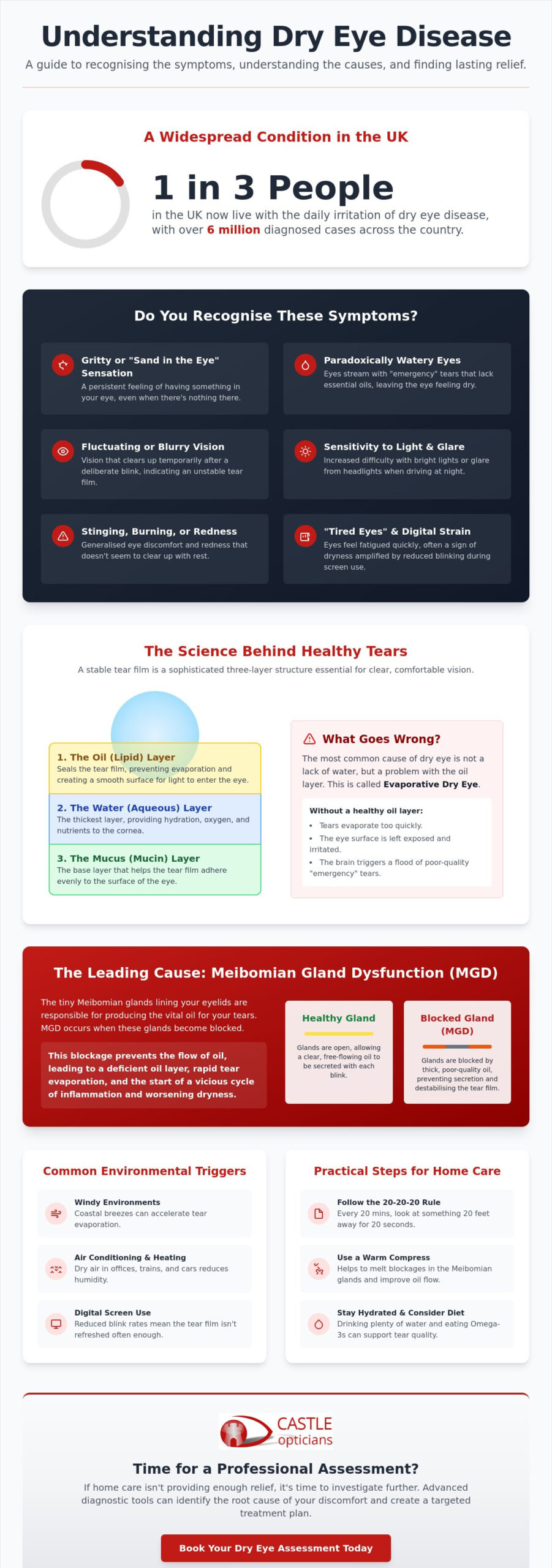
Did you know that approximately one in three people in the UK now live with the daily irritation of dry eye disease? With over six million cases diagnosed across the country, you certainly aren’t alone if you’re struggling with a persistent stinging sensation or vision that fluctuates with every blink. It’s a common frustration to deal with “watery eyes” that somehow still feel incredibly gritty and parched, making it difficult to focus on your work or enjoy your favourite hobbies. This guide will help you uncover the underlying causes of eye dryness and provide practical, expert-backed strategies to restore the lasting comfort and clarity you deserve.
We understand how much this discomfort can disrupt your quality of life, and we’re here to help you find a solution that works. We’ll walk through the most effective home management steps, explain when it’s time for a professional eye test, and help you determine if your symptoms might be a sign of a deeper health issue. By the end, you’ll have a clear roadmap to better eye health and a more comfortable daily routine.
Key Takeaways
- Learn why that “sand in the eye” feeling is a sign of chronic eye dryness and how to recognise the specific symptoms that require attention.
- Discover the complex science behind your tear film and why the Meibomian glands are the unsung heroes of comfortable vision.
- Identify how unique local triggers, such as the Essex coastal breeze and air-conditioned train commutes, may be worsening your condition.
- Explore practical self-care strategies, from specific hydration tips to the proper technique for using warm compresses at home.
- Find out when it’s time to seek a professional assessment and how advanced diagnostic tools can provide a clearer path to relief.
Understanding Eye Dryness: Symptoms and Why Your Eyes Feel Gritty
Many of us have experienced that frustrating sensation of having a bit of grit or sand stuck in our eye, only to find nothing there when we look in the mirror. This persistent discomfort is often the primary indicator of eye dryness, a condition where the eyes suffer from a chronic lack of sufficient lubrication and moisture on their surface. Whilst it might feel like a minor annoyance, eye dryness is formally defined as a multifactorial disease of the ocular surface resulting in tear film instability. It’s a complex issue that affects how you see and feel throughout the day.
The symptoms can vary from person to person, but they often include a distinct set of uncomfortable sensations:
- A persistent stinging or burning feeling, especially in windy environments.
- Generalised redness that doesn’t seem to clear with rest.
- The classic “sand in the eye” or gritty sensation.
- Sensitivity to light or a heavy feeling in the eyelids.
There is a peculiar irony to this condition that often confuses people: watery eyes. You might find your eyes streaming with tears, yet they still feel incredibly dry and irritated. This happens because the brain detects the lack of moisture and triggers a flood of “emergency” tears. Unfortunately, these reflex tears are mostly water and lack the essential oils needed to stay on the eye surface. To understand why this balance is so delicate, it helps to look into The Science of Tears, which reveals how a breakdown in any layer of your tear film can lead to these symptoms.
Recognising the Early Signs of Dry Eye Disease
In the early stages, you might notice your vision fluctuates. Perhaps things look a bit blurry, but then clear up momentarily after a deliberate blink. This is a sign that your tear film isn’t smooth enough to provide a clear window for light. Many people also find that nighttime driving becomes more taxing; the glare from oncoming headlights feels more intense, and your eyes feel fatigued much faster than they used to. Another overlooked sign is the presence of stringy mucus around the eyes, which is your body’s attempt to compensate for the lack of healthy lubrication.
When “Tired Eyes” Are Actually Dry Eyes
It’s easy to dismiss these feelings as general fatigue, but “tired eyes” are often clinically dry eyes in disguise. Digital eye strain is a major contributor to this. When we focus on computer screens or smartphones, our blink rate drops significantly. This lack of blinking means the eye surface isn’t being refreshed as often as it should be. We want to reassure you that these symptoms are manageable. By understanding that your discomfort stems from a physical lack of moisture rather than just a long day, you can take the first steps toward lasting relief.
The Science of Tears: Why Your Eyes Are Not Staying Moist
To find relief, we first need to look at what makes a healthy tear. It’s easy to think of tears as simple droplets of water, but they’re actually a sophisticated cocktail of three distinct layers. At the base, a mucus layer helps the tear stick to the eye surface. In the middle, the aqueous layer provides essential hydration. Finally, an outer oil layer acts as a sealant. If any of these layers are compromised, you’ll likely experience eye dryness. When this delicate balance is disrupted, your vision can become blurry and your eyes can feel constantly irritated.
Most people assume their eyes are dry because they aren’t producing enough liquid. This is known as aqueous deficiency. However, a far more common issue is Evaporative Dry Eye. This occurs when your water layer evaporates too quickly because the protective oil layer is missing or poor quality. Understanding Eye Dryness involves recognising which of these systems has broken down. For many, the eyes are producing plenty of water, but it simply isn’t staying where it’s needed to do its job.
The Role of Meibomian Gland Dysfunction (MGD)
The Meibomian glands, tucked neatly inside your eyelids, are responsible for secreting that vital oil. When these glands become blocked or the oil becomes too thick to flow, it leads to Meibomian Gland Dysfunction, or MGD. This is the leading cause of dry eye symptoms globally. Without that oil to seal the surface, your tears vanish into the air, leaving the eye exposed and sore. This often triggers a vicious circle where the resulting inflammation makes the glands even more sluggish, which in turn makes the eye dryness even more severe.
Hormonal and Age-Related Factors
Age and hormones also play a significant role in how well your eyes stay moist. Amongst our community in Essex, particularly for those over 60, we often see a natural decline in the volume of tears the body produces. Women are especially susceptible to these changes due to hormonal shifts during menopause which can affect the lipid layer. Check your medicine cabinet too; common treatments for high blood pressure or hay fever can inadvertently reduce tear production. If you’ve noticed your vision becoming less comfortable as you get older, a professional eye test over 60 in Essex at one of our local practices can help identify the specific cause and provide a tailored plan for relief.
Common Triggers for Eye Dryness in South Essex
Living in South Essex offers beautiful coastal views and a vibrant community life, but it also presents unique challenges for our ocular health. Whether you’re catching the train from Benfleet for a London commute or enjoying a blustery walk along the sea wall, your environment plays a massive role in how your eyes feel. Identifying Common Triggers for Eye Dryness is the first step toward finding a lifestyle that supports clearer vision. Many of our visitors in Rayleigh find that their symptoms flare up during the winter months when central heating is running constantly. This artificial warmth strips moisture from the air, which can leave the surface of the eye feeling parched and irritated.
The “commuter eye” effect is another local phenomenon we often discuss during consultations. Spending an hour each way in an air-conditioned train carriage creates a dry micro-climate that accelerates tear evaporation. When you combine this with a high-pressure office environment where air-con is often set to high, the cumulative impact on your tear film is significant. These factors often lead to a persistent feeling of fatigue that people mistakenly attribute to a lack of sleep rather than a lack of moisture.
The Digital Strain: Screens and Your Blink Rate
Modern life in Essex involves a significant amount of screen time, and research suggests that our blink rate can drop by as much as 60% when we’re focused on digital devices. Normally, we blink about 15 to 20 times per minute; however, this falls to just 5 or 7 times when we’re scrolling through a smartphone or working on a laptop. This lack of movement prevents the Meibomian glands from releasing the vital oils needed to seal in moisture. To combat this, we recommend the 20-20-20 rule: every 20 minutes, look at something 20 feet away for at least 20 seconds. Additionally, try positioning your monitor slightly below eye level. This encourages your eyelids to sit lower, reducing the surface area of the eye exposed to the drying effects of the office air.
For business owners who want to ensure their digital infrastructure supports employee health, professional IT and security consultancies like Beyer Bytes can provide the expertise needed to create ergonomic and secure office environments.
Environmental Factors: Coastal Winds and Pollution
For those living near Canvey Island or the Thames Estuary, the wind is a major factor in eye dryness. A stiff coastal breeze can strip the moisture from your eyes in minutes, leading to that familiar stinging sensation. We often suggest that residents invest in high-quality wraparound sunglasses to provide a physical barrier against the elements whilst outdoors. Inside the home, especially in Rayleigh properties where heating can be quite drying, using a humidifier can help maintain a more comfortable level of ambient moisture. If these environmental adjustments don’t bring the relief you need, it might be time for a more detailed assessment at our Rayleigh or Benfleet practices to see if specialized eye dryness treatments are required.
How to Manage Eye Dryness: Practical Steps and Home Care
Managing eye dryness doesn’t always require complex clinical intervention. Often, small adjustments to your daily routine can significantly improve the quality of your tear film and restore comfort. It starts with hydration from the inside out. Drinking plenty of water is essential, but research also suggests that Omega-3 fatty acids, commonly found in oily fish or high-quality supplements, can help improve the consistency of the oil layer in your tears. This prevents them from evaporating too quickly whilst you’re out and about in the Essex wind.
When selecting over-the-counter treatments, you’ll find a wide variety of lubricants available. In the UK, these typically range in price from £1.49 to £14.99. We generally recommend preservative-free eye drops, especially if you need to apply them more than four times a day. Standard bottles often contain preservatives that can actually irritate the ocular surface over time, potentially worsening your eye dryness rather than soothing it. Coupling these drops with good eyelid hygiene, such as using gentle, dedicated cleansers, can also help manage underlying issues like blepharitis.
The 5-Minute Warm Compress Routine
One of the most effective ways to support your Meibomian glands is a daily warm compress routine. This simple step helps to soften and release the oils that prevent tear evaporation. Follow these steps for the best results:
- Soak a clean flannel in warm water or use a microwaveable eye mask.
- Place it over your closed eyes for 5 to 10 minutes. Ensure the temperature is comfortably warm but never hot enough to irritate the delicate skin of your eyelids.
- Once finished, use a clean finger to perform a gentle massage along the lash line. This encourages the newly softened oils to flow onto the eye surface.
Eye Dryness and Contact Lenses
Many people find that their eye dryness becomes particularly noticeable whilst wearing contact lenses, often resulting in “end-of-day” discomfort or a gritty sensation. If you struggle to wear your lenses for a full day, it doesn’t mean you have to give them up entirely. Modern lens technology has advanced significantly. Switching to daily disposables or lenses made from silicone hydrogel can provide much better breathability and moisture retention. If you’re finding your current lenses uncomfortable, we recommend booking a professional contact lens fitting at one of our practices to explore more suitable options tailored to your needs.
Professional Dry Eye Assessment at Castle Opticians
Whilst home care and lifestyle adjustments can provide significant relief for many, these methods have their limits. If you’ve followed a warm compress routine and adjusted your screen habits but still struggle with persistent eye dryness, it’s a clear signal that the underlying cause needs a closer look. Relying solely on over-the-counter drops can sometimes mask a deeper issue, such as advanced Meibomian Gland Dysfunction or an underlying health condition; for those who wish to investigate broader medical concerns, you can learn more about Ready Health. At our Rayleigh and Benfleet practices, we believe that a professional assessment is the most logical next step to move from temporary relief to a long-term solution.
As an independent optician, we offer a level of personal attention that is often missing in larger corporate environments. We don’t believe in rushed appointments or one-size-fits-all advice. Instead, we take a methodical, patient approach to your care, acting as a trusted local expert who understands your history and your specific environment. This unhurried consultation style allows us to use advanced diagnostic tools to pinpoint exactly why your tear film is failing, ensuring that the plan we create is as unique as your eyes. Many patients are surprised to discover that a comprehensive eye health check in Essex goes far beyond a simple sight test, encompassing a full assessment of your ocular surface and general wellbeing.
What Happens During a Dry Eye Consultation?
During a dedicated consultation, we perform several specialised tests to map out your ocular health. One of the most important is the Tear Film Breakup Time (TFBUT) test. By using a harmless clinical dye, we can observe exactly how many seconds it takes for dry patches to form on the eye surface after you blink. We also use staining techniques to check for any microscopic irritation on the cornea or conjunctiva. A significant portion of our assessment focuses on the health of your Meibomian glands; we check for blockages or signs that the oil production has become stagnant. This thoroughness ensures we provide a tailored treatment plan rather than just generic suggestions.
Booking Your Visit in Rayleigh or South Benfleet
We’re proud to be a familiar face in the South Essex community, providing a welcoming environment where you can feel respected and looked after. Whether you’re visiting us for a routine eye test or a specific assessment for eye dryness, our goal is to restore clarity and comfort to your daily life. We offer both private consultations and NHS eye tests, ensuring that expert care is accessible to all our neighbours. Don’t let persistent grittiness dictate how you spend your day. Book your comprehensive eye health check at Castle Opticians today and take the first step toward lasting relief.
Take Control of Your Vision Comfort
Living with persistent irritation can be draining, but understanding the triggers and science behind eye dryness is the first step toward lasting relief. Adopting the 20-20-20 rule during your workday and committing to a daily warm compress routine can significantly restore your comfort. When home care isn’t providing the clarity you need, seeking a deeper understanding through professional expertise is the best path forward.
As an independent, family-run optician serving South Essex since 1989, we combine a warm, community-focused approach with advanced diagnostic technology. Our highly experienced clinical team is here to help you identify the root cause of your symptoms and provide a bespoke management plan that fits your lifestyle. You don’t have to settle for gritty, uncomfortable eyes.
Book an Eye Health Check in Rayleigh or Benfleet at Castle Opticians today. We’re ready to help you rediscover clear, comfortable vision in a welcoming local setting.
Frequently Asked Questions
Can eye dryness cause permanent damage to my vision?
Permanent damage is rare but possible in extreme, untreated cases where chronic eye dryness leads to significant inflammation. This persistent irritation can eventually cause corneal scarring or even ulcers, which may permanently impair the clarity of your vision. Seeking a professional assessment early ensures that we can manage these risks effectively and protect the long-term health of your ocular surface before serious complications arise.
Why are my eyes dry in the morning but better during the day?
Waking up with gritty eyes often suggests that your eyelids aren’t closing fully during sleep, a condition known as nocturnal lagophthalmos. This allows the moisture on the surface of your eyes to evaporate overnight. Additionally, your tear production naturally slows down whilst you sleep. Using a thicker lubricating gel or a dedicated eye ointment before bed can provide a protective barrier that keeps your eyes comfortable until morning.
Are there specific vitamins that help with dry eye symptoms?
Omega-3 fatty acids are the most beneficial nutrients for supporting the oil layer of your tear film. You can find these in oily fish like mackerel or in high-quality flaxseed supplements. Some evidence also suggests that Vitamin A is vital for maintaining the health of the conjunctiva. It’s always best to discuss any new supplements with a professional to ensure they’re appropriate for your specific health needs and lifestyle.
Is it safe to use “redness relief” drops for eye dryness?
It is generally not advisable to use “redness relief” drops to treat eye dryness. These products work by constricting the blood vessels on the eye surface, which can lead to “rebound redness” and increased irritation once the drops wear off. Instead, you should look for preservative-free lubricating drops. These are designed to address the underlying lack of moisture rather than just temporarily masking the appearance of redness.
How often should I have a dry eye assessment?
Most people struggling with chronic symptoms should have a dedicated assessment once every twelve months. This allows us to monitor any changes in your tear film and adjust your management plan accordingly. If you notice a sudden increase in discomfort or if your vision becomes more blurred than usual, you should book an appointment sooner. Regular checks are the best way to stay ahead of fluctuating symptoms.
Can laser eye surgery cause long-term eye dryness?
Dryness is a very common side effect of laser eye surgery because the procedure can temporarily disrupt the nerves that trigger tear production. Whilst most patients find their symptoms resolve within three to six months, some individuals may experience more persistent issues. It’s essential to have a thorough tear film analysis before surgery to ensure your eyes are healthy enough to recover well from the procedure.
What is the difference between an eye test and a dry eye assessment?
A standard eye test focuses on your prescription for lenses and a general check of your eye health, whereas a dry eye assessment is a specialised investigation. During this dedicated session, we use specific diagnostic tools to measure your tear evaporation rate and the function of your Meibomian glands. These detailed measurements aren’t part of a routine check-up but are vital for creating a bespoke treatment plan for persistent irritation.
Does wearing glasses instead of contact lenses help with dryness?
Switching to glasses can offer significant relief because contact lenses sit directly on the tear film and can accelerate moisture evaporation. Glasses also act as a physical shield against the drying effects of the wind, which is particularly helpful if you spend time outdoors in Essex. Many of our visitors find that wearing glasses during long periods of screen work helps to reduce their overall level of daily discomfort. For older patients in the region, our dedicated guide on eye tests over 60 in Essex explains the full range of NHS entitlements and health checks available to help protect your vision long term.