
Imagine picking up your favourite book or trying to recognise a friend’s face across a busy Rayleigh high street, only to find the details have become a frustrating blur. This change often signals the onset of age-related eye conditions Essex residents frequently experience as they reach their later years. It’s a common shift that brings a quiet anxiety about the future and a fear of losing the independence that comes with clear, reliable sight.
It’s completely natural to feel concerned when your vision begins to change, but you don’t have to navigate these worries alone. We understand the value of clear, professional guidance when it comes to your health. This guide is designed to help you identify, manage, and prevent these conditions with expert support from your local independent opticians, providing the clarity you need to feel confident in your eye care choices.
We’ll explore the crucial differences between normal ageing and more serious eye diseases, ensuring you know exactly what to look for. You’ll also discover the advanced screening technologies available at our Rayleigh and Benfleet practices, whilst learning practical, everyday tips to slow down vision loss. Whether you’re noticing new symptoms or simply want to stay proactive, we’re here to ensure your sight remains protected for the long term.
Key Takeaways
- Learn to recognise the common age-related eye conditions Essex residents face, such as AMD and glaucoma, and understand how they specifically affect your central and peripheral vision.
- Identify the early red flags that require professional attention, including distorted straight lines and increased sensitivity to night-time glare whilst driving.
- Discover why advanced eye health screening goes beyond a standard sight test by examining the deeper layers of the retina to catch issues before symptoms appear.
- Gain practical tips on protecting your sight through specific nutritional choices like Omega-3 and the importance of high-quality UV protection.
- Understand the benefits of choosing an independent, community-focused optician in Rayleigh or South Benfleet for personalised, long-term clinical care.
Common Age-Related Eye Conditions and Their Impact on Vision
As we age, our eyes undergo subtle but significant changes. Identifying common age-related eye conditions Essex residents might face is the first step toward maintaining a high quality of life. While some changes are merely inconvenient, others require professional intervention to prevent permanent damage. Understanding these conditions helps you know when to seek a clinical opinion.
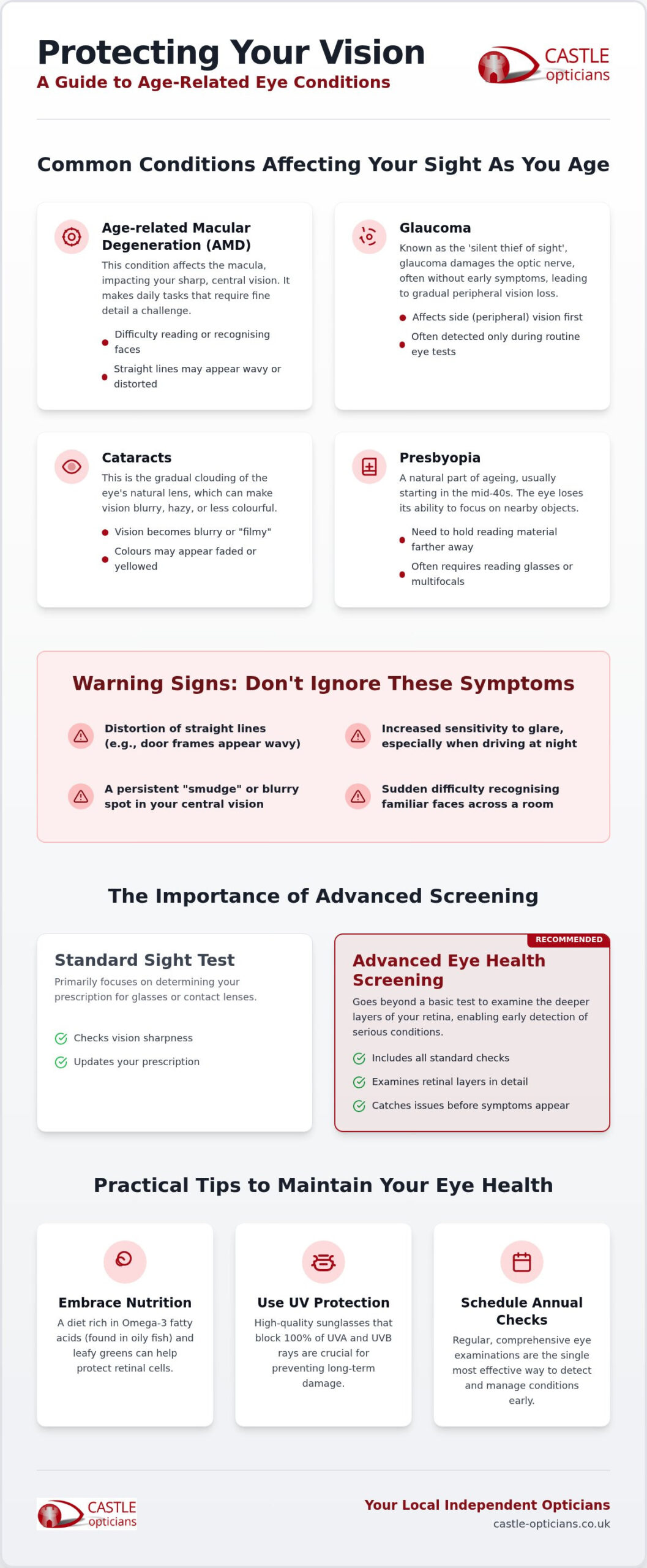
- Age-related Macular Degeneration (AMD): This primarily affects the macula, the part of the eye responsible for sharp, central vision. It makes tasks like reading the morning paper or recognising a familiar face in the supermarket increasingly difficult.
- Glaucoma: Often called the ‘silent thief of sight’, glaucoma usually develops without early symptoms. It damages the optic nerve, typically due to increased pressure within the eye, and can lead to a gradual loss of peripheral vision if not caught during a routine eye test.
- Cataracts: This involves the gradual clouding of the eye’s natural lens. Beyond making things look blurry, cataracts can significantly dull colour perception, making the world appear yellowed or faded.
- Presbyopia: Most people notice this in their mid-40s. It’s the natural loss of the eye’s ability to focus on close objects, often resulting in the need for reading lenses or a change in your contact lenses prescription.
Why Ageing Affects Our Eyesight
Over time, the proteins in our eye’s lens begin to clump together, and the light-sensitive cells in the retina may become less efficient. Genetics play a significant role here. If your parents had certain conditions, you might be at higher risk yourself. Modern life also adds pressure, as increased screen time can lead to digital eye strain that complicates existing age-related issues. These biological shifts are a normal part of life, but they require careful management to ensure they don’t limit your lifestyle.
The Prevalence of Sight Loss in Essex
Monitoring the prevalence of age-related eye conditions Essex residents experience is a core part of our local clinical mission. Within our communities in Rayleigh and South Benfleet, we see a high proportion of over-50s who benefit from regular screening. South Essex residents should prioritise annual checks because early detection is the only way to distinguish between ‘normal’ ageing, like needing a slightly stronger prescription, and pathological conditions that could lead to sight loss. Since 1989, we’ve focused on providing the thorough, unhurried examinations needed to spot these differences early, whilst ensuring every patient feels respected and looked after.
Warning Signs: Recognising the Symptoms of Ageing Eyes
Recognising the early warning signs of age-related eye conditions Essex residents often experience can be the difference between manageable change and permanent sight loss. Often, these symptoms develop so gradually that they feel like a normal part of getting older. However, specific visual cues act as red flags that require professional attention from a clinical expert. Knowing what to look for allows you to act before your independence is compromised.
Visual Distortions and Central Vision Loss
One of the most significant indicators of Age-related Macular Degeneration (AMD) is the distortion of straight lines. If the edge of a door frame or a line of text appears wavy or bent, it suggests the macula is under stress. You can monitor this at home using an Amsler grid, which is a simple tool consisting of horizontal and vertical lines. If any part of the grid looks distorted or missing, you should seek a clinical opinion immediately.
Central vision loss also manifests as difficulty in recognising familiar faces or struggling to read even with your usual lenses. This isn’t just a sign that you need a stronger prescription. It’s an indication that the light-sensitive cells in the centre of your retina may be affected. Whilst blurred vision is common as we age, a sudden or persistent “smudge” in your central view is never normal.
Changes in Night Vision and Light Sensitivity
Driving at night often becomes the first point of frustration for those with ageing eyes. You might notice an increased sensitivity to glare from oncoming headlights or streetlamps. This scattering of light is frequently linked to cataracts, where the lens becomes cloudy and prevents light from focusing cleanly on the retina. You might also see “haloes” or rings around bright lights, which can make navigating Essex roads after dark feel unsafe.
Beyond glare, it’s vital to watch for other sudden changes. These include:
- Sudden flashes of light that look like small lightning bolts.
- A significant increase in “floaters” or small dark spots drifting across your vision.
- A subtle narrowing of your side vision, making you feel like you’re looking through a tunnel.
A gradual loss of peripheral vision is particularly concerning because it’s a primary symptom of glaucoma. Because this happens slowly, many people don’t realise their field of view is shrinking until the condition is advanced. If you find yourself bumping into things or feeling less aware of your surroundings, it’s vital to have your eye pressure and optic nerve checked. If you’ve noticed any of these changes, it’s a good idea to arrange a clinical assessment with our friendly team in Rayleigh or South Benfleet.
Advanced Eye Health Screening vs Standard Sight Tests in Essex
Many people assume that all eye examinations are identical, but there’s a significant difference between a basic prescription check and a thorough clinical assessment. A standard sight test is primarily designed to determine if you need new lenses or frames. While it includes a basic look at your external eye health, it often lacks the depth required to monitor complex age-related eye conditions Essex residents may develop as they get older. Advanced screening, by contrast, uses sophisticated technology to look beneath the surface of the retina, identifying issues that are invisible to the naked eye.
Since 1989, our independent practices in Rayleigh and South Benfleet have prioritised investment in high-level diagnostic tools. We utilise digital retinal photography to create a permanent record of your eye’s condition. By capturing these detailed images at every visit, we can monitor subtle changes over several years. This long-term tracking is essential for spotting the earliest signs of disease, providing a level of security that a simple vision check cannot offer.
The Power of OCT Scans in Early Detection
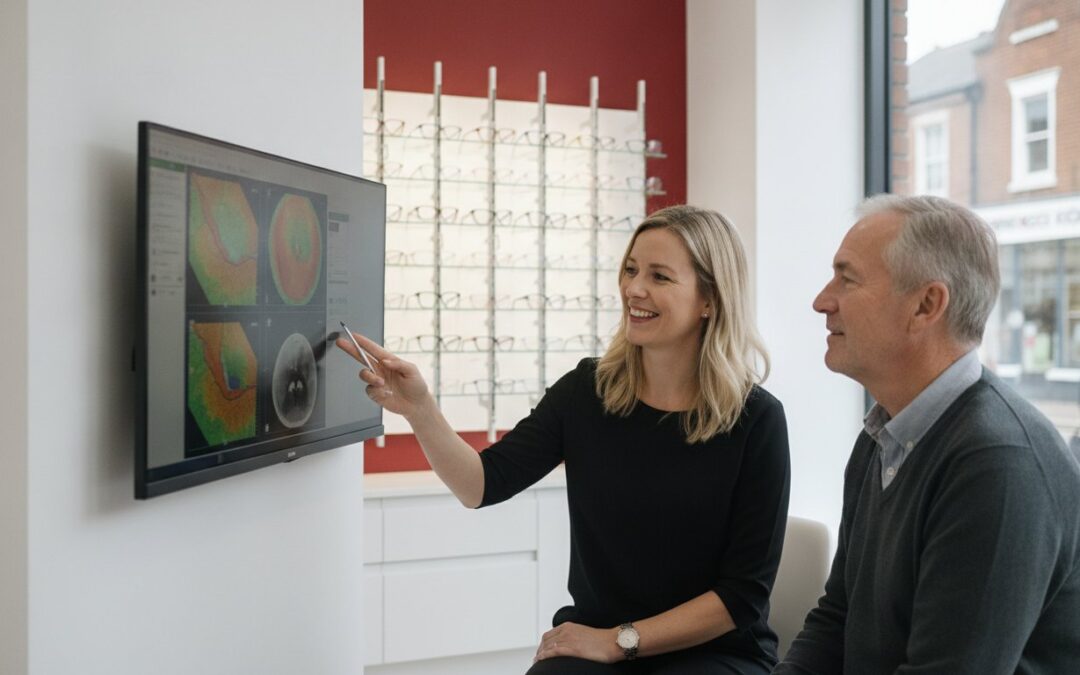
One of the most effective tools in modern optometry is Optical Coherence Tomography, often referred to as an OCT scan. You can think of this as an ultrasound for the eye. Instead of just seeing the top layer of the retina, an OCT scan creates a 3D cross-section, revealing the delicate structures underneath. This is a game-changer for preventative care because it can detect signs of glaucoma and AMD up to five years earlier than traditional methods. Early intervention is the most effective way to protect your vision. You can find out more about how this works by reading about our Comprehensive Eye Health Check in Essex.
Personalised Care at Independent Practices
The clinical technology we use is only one part of the story. At an independent practice, we believe in the value of time. We provide longer appointment slots to ensure your consultation is methodical, patient, and unhurried. This allows our clinicians to listen to your concerns and explain their findings in a way that is easy to understand. Seeing the same professional at each visit ensures continuity of care, as we become familiar with your specific health history and lifestyle needs. This personalised approach creates a welcoming environment where you feel respected and thoroughly looked after, rather than just being a name on a corporate schedule. Whether you visit us in Rayleigh or South Benfleet, our focus remains on your long-term well-being and the quality of your experience.
Preventative Measures: How to Maintain Optimal Eye Health as You Age
While clinical intervention is vital, the choices you make every day play a massive role in protecting your sight. Taking a proactive approach to age-related eye conditions Essex patients face can significantly slow down the progression of vision loss. It isn’t just about your eyes. Your general health is deeply connected to your visual clarity. For instance, managing systemic issues like high blood pressure and diabetes is essential, as these conditions can damage the delicate blood vessels in the retina.
Smoking is another critical factor. It is perhaps the most significant modifiable risk factor for Age-related Macular Degeneration (AMD). Studies show that smokers are significantly more likely to develop AMD than non-smokers, as the habit reduces blood flow to the eyes and increases oxidative stress. Quitting at any age can help reduce this risk and preserve your remaining vision for longer. By making these lifestyle adjustments, you can actively reduce the impact of age-related eye conditions Essex residents often encounter as they get older.
Dietary Choices for Healthy Eyes
What you put on your plate matters. Specific nutrients like Lutein and Zeaxanthin act as a natural sunblock for the eyes, filtering out harmful blue light. You can find these in abundance in dark, leafy greens like kale and spinach, as well as colourful vegetables like peppers and corn. Omega-3 fatty acids, found in oily fish, are also vital for maintaining the quality of your tear film and preventing dry eye symptoms. Don’t forget the importance of staying hydrated. Drinking enough water ensures your eyes stay lubricated and comfortable throughout the day. If you find it difficult to get these nutrients through diet alone, specialised eye health supplements may be beneficial, though it’s always best to discuss this with your clinician first.
Protective Eyewear and UV Safety
Living near the Essex coast means we often enjoy bright, reflective light from the water and open landscapes. Protecting your eyes from ultraviolet (UV) damage is non-negotiable. High-quality sunglasses with a ‘UV400’ rating are essential for blocking 100% of UVA and UVB rays, which can accelerate the development of cataracts and AMD. Beyond sun protection, modern lens technology offers various coatings designed to reduce digital eye strain, which is increasingly common in later life. Choosing the right lenses is about more than just a prescription. It’s about finding the right technology for your lifestyle. You can learn more about your options in our Lenses: The Ultimate Buying Guide.
If you’re ready to take the next step in protecting your vision, we invite you to visit us in Rayleigh or South Benfleet for a personalised consultation with our friendly, expert team.
Personalised Eye Care for the Essex Community: Why Choose Castle Opticians?
Since 1989, we’ve been a fixture of the Rayleigh and South Benfleet communities, providing a level of care that goes far beyond a simple transaction. Managing age-related eye conditions Essex residents face requires a partner who understands your history and takes a genuine interest in your long-term health. We combine clinical excellence with the warm, welcoming atmosphere of a local independent practice. This ensures you never feel like just another appointment on a busy high-street schedule.
Whether you require an NHS-funded examination or prefer a private consultation with advanced screening, we provide a thorough, unhurried service. Our goal is to ensure you leave with a clear understanding of your eye health and the best possible vision for your lifestyle. We also offer an extensive range of high-quality frames and precision lenses, ensuring your eyewear is as functional as it is stylish. Our team is dedicated to helping you find the perfect fit, matching technical accuracy with personal consideration.
Booking Your Eye Test in Rayleigh or South Benfleet
Organising your next check-up is a straightforward process. You can simply call our Rayleigh or South Benfleet branches to find a time that suits you. Many people aren’t aware of their eligibility for an NHS eye test in Essex. If you’re over 60, or if you have certain medical conditions like diabetes or a family history of glaucoma, your test is usually covered by the NHS. We’re always happy to advise you on your eligibility when you book.
When you arrive for your appointment, please bring your current glasses and a list of any medications you’re taking. This information is vital for a thorough consultation, as it helps our clinicians understand how your general health might be impacting your sight. We take the time to discuss your findings in detail, ensuring any age-related eye conditions Essex patients might be worried about are addressed with clarity and care. This methodical approach ensures nothing is overlooked.
The Castle Opticians Difference
What sets us apart is our focus on long-term patient relationships. We aren’t interested in quick sales. Instead, we prioritise finding the right solution for your specific needs. This is especially important when it comes to varifocals and specialised lens technology. These products require expert fitting and advice to ensure they work perfectly for your daily tasks, whether that’s reading, driving, or using a computer. Our clinicians take the time to explain the benefits of different options without any pressure.
Our practices provide a calm, unhurried environment designed for your comfort. We know that clinical environments can sometimes feel intimidating, so we’ve created a space where you can feel respected and looked after. From the moment you walk through our doors in Rayleigh or South Benfleet, you’ll find a friendly team ready to support you with professional standards and a personal touch. We believe that everyone deserves high-quality, local eye care delivered with a smile.
Securing Your Vision for the Years Ahead
Protecting your sight is one of the most significant investments you can make in your long-term independence. We’ve explored how identifying early warning signs and embracing advanced screening technology can fundamentally change the trajectory of age-related eye conditions Essex residents often face. By combining proactive lifestyle choices, such as better nutrition and UV protection, with the thorough clinical expertise of an independent optician, you can maintain clarity and comfort well into the future.
Since 1989, Castle Opticians has been dedicated to providing this personalised care to our neighbours across Rayleigh and South Benfleet. We’re an independent group that welcomes both NHS and private patients into a calm, unhurried environment where your health is the only priority. You don’t have to wait for your vision to noticeably change before taking action. Early intervention remains the most effective way to preserve your quality of life and peace of mind.
Book your comprehensive eye health check at Castle Opticians today and let our experienced team look after your sight. We look forward to welcoming you soon and helping you enjoy a lifetime of clear, healthy vision.
Frequently Asked Questions
What is the most common eye condition as you get older?
Presbyopia is the most frequent change, usually starting in your mid-40s as the eye’s lens loses flexibility. This makes reading small print difficult. As you move into your 60s and 70s, cataracts become one of the most common age-related eye conditions Essex residents visit us for. These involve the natural lens becoming cloudy over time, which eventually requires a simple surgical procedure to restore your clarity and colour perception.
Can age-related macular degeneration be cured?
There is currently no permanent cure for Age-related Macular Degeneration (AMD), but the condition can be managed effectively to preserve your remaining sight. Dry AMD is often slowed down through specific nutritional changes and UV protection. Wet AMD requires clinical treatments like injections to stop abnormal blood vessel growth. Early detection through regular screening is the most vital factor in keeping your vision stable for as long as possible.
How often should someone over 60 have an eye test in Essex?
If you are over 60, the NHS generally recommends having an eye test every two years. However, our clinicians in Rayleigh and South Benfleet may suggest annual check-ups if you have a family history of glaucoma or if we are monitoring early signs of other conditions. Regular attendance ensures that any subtle shifts in your eye health are caught early, allowing for more effective management of your vision over time.
Is a standard eye test enough to detect glaucoma?
A standard eye test includes basic pressure checks and a look at the optic nerve, which can identify potential issues. However, it isn’t always enough to catch glaucoma in its earliest, most treatable stages. We recommend advanced screening technology, such as OCT scans, because they allow us to see structural changes deep within the eye. This can reveal nerve damage years before you notice any actual loss in your peripheral vision.
What are the first signs of cataracts?
The first signs of cataracts often include a subtle clouding of your vision, making it feel like you are looking through a dirty window. You might notice that colours look faded or yellowed, and you may experience increased sensitivity to bright lights. Driving at night often becomes more difficult because of glare and haloes around streetlamps, which happens as the clouding lens scatters light instead of focusing it clearly.
Does the NHS cover advanced eye health scans?
The NHS covers the cost of a standard sight test for those over 60 or with certain medical conditions. This includes a basic health check and a prescription update. Advanced diagnostic technology, such as OCT screening, is usually offered as a private supplement to the NHS test. This small additional investment allows for a much more detailed analysis of the retinal layers, providing greater peace of mind about long-term health.
Can lifestyle changes really slow down vision loss?
Lifestyle choices have a documented impact on the progression of sight loss. Stopping smoking is one of the most effective ways to reduce your risk of developing AMD, as it improves blood flow and reduces oxidative damage. Wearing high-quality UV400 sunglasses and eating a diet rich in Lutein and Zeaxanthin also provides a protective barrier for your retinal cells. These simple habits can significantly help in managing age-related eye conditions Essex patients face.
Why should I choose an independent optician for age-related eye care?
Choosing an independent practice like ours means you benefit from longer, unhurried appointments and continuity of care. You’ll often see the same clinician at every visit, allowing us to build a detailed history of your eye health over many years. We prioritise clinical excellence and invest in advanced technology that might not be available at every high-street chain, ensuring your eyes are looked after with high professional standards and personal care.