
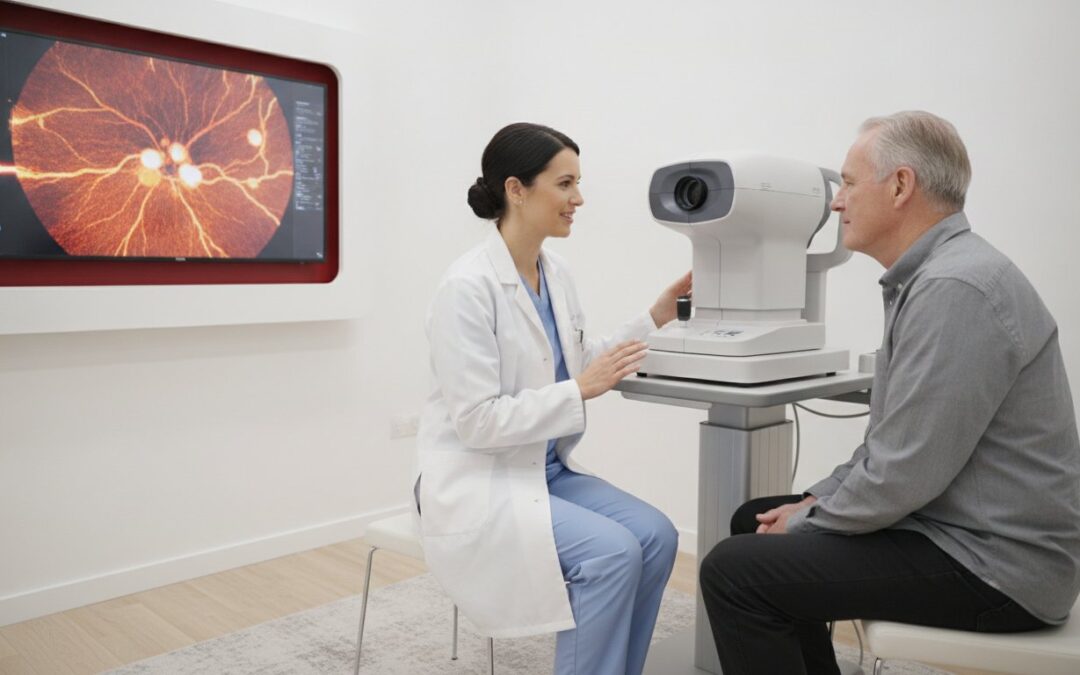
Did you know that diabetic retinopathy is the leading cause of blindness among the working-age population in the UK? It’s a statistic that can feel daunting, especially if you’re already managing the daily complexities of Type 1 or Type 2 diabetes. You likely understand that attending your annual diabetic eye screening Essex appointment is crucial, yet the process itself often brings up more questions than answers. It’s perfectly natural to feel a bit anxious about the sting of eye drops, the temporary blurred vision, or simply how this 30-minute check differs from your usual trip to the optician.
This guide will demystify the screening process, explaining exactly what to expect during your visit and why it serves as a specific safety net rather than a replacement for your comprehensive eye care. We’ll explore the logistics of the NHS programme in Rayleigh and Benfleet, how to prepare for your results, and how independent clinical expertise helps you look beyond the screening to maintain your long-term vision. By understanding the difference between a retinopathy check and a full clinical examination, you can ensure your eyes receive the thorough, personal attention they deserve.
Key Takeaways
- Understand why the NHS diabetic eye screening Essex programme is a vital, mandatory safeguard for anyone aged 12 and over with Type 1 or Type 2 diabetes.
- Prepare for your appointment with confidence by knowing exactly how dilating eye drops and advanced imaging will be used to protect your sight.
- Clarify the common misconception that a screening invitation replaces your standard eye test, ensuring you don’t miss out on vital clinical checks.
- Learn how to manage your local logistics, including what to do if you need to change your screening location within Mid or South Essex.
- Discover how a comprehensive examination at an independent practice in Rayleigh or Benfleet provides the personal attention needed for long-term vision protection.
Understanding Diabetic Eye Screening in Essex: The Vital Safety Net
Diabetic eye screening Essex is a dedicated clinical programme designed to catch changes in the back of the eye before they impact your vision. It’s not the same as a standard eye test where you check your prescription for glasses; instead, this is a targeted screening that uses digital retinal photography to look for signs of damage caused by diabetes. In our local area, the Mid and South Essex service is delivered through a network of community clinics, GP surgeries, and hospitals. It’s a vital safety net that helps prevent sight loss for thousands of residents across Rayleigh, Benfleet, and the wider county.
The programme uses high-resolution cameras to take detailed images of your retina. These photos are then reviewed by specialist graders who can spot tiny changes that wouldn’t be visible to you in your daily life. Because these changes often happen without pain or obvious vision loss, the screening acts as an early warning system. It ensures that if treatment is needed, it can be started as soon as possible.
What is Diabetic Retinopathy?
This condition occurs when high blood sugar levels over time cause damage to the tiny blood vessels within the retina. This is known as diabetic retinopathy, and it’s a leading cause of preventable blindness in the UK. The primary challenge is its “silent” nature. In the early stages, you won’t notice your sight getting worse. You won’t feel any discomfort. By the time symptoms like floaters or blurred vision appear, the damage may already be advanced. Early detection in Essex clinics is the only way to identify these issues whilst they are still treatable, preventing permanent sight loss before it begins.
Who is Eligible in South Essex?
If you’re aged 12 or over and have a diagnosis of Type 1 or Type 2 diabetes, you’ll be invited for screening. The NHS Mid and South Essex programme, currently managed by InHealth Intelligence, typically sends out invitation letters once a year. Whilst annual checks are the standard, some patients at very low risk might be moved to a 24-month cycle if their previous two screenings showed no signs of retinopathy. This adjustment follows evidence that a two-year interval is safe for those with stable eye health.
There’s one main exception to this rule. If you’re already under the care of a hospital ophthalmology specialist for diabetic eye reviews, you don’t need to attend the community screening as well. Your specialist will already be monitoring your retina as part of your ongoing treatment. For everyone else, attending your diabetic eye screening Essex appointment is a non-negotiable part of managing your health and protecting your independence.
What to Expect During Your Essex Diabetic Eye Screening Appointment
Walking into a clinical environment can feel intimidating, but your appointment for diabetic eye screening Essex is designed to be straightforward and stress-free. Most visits last approximately 30 minutes. You’ll be looked after by professional screening staff who understand the specific needs of those living with diabetes. Their goal is to capture the clearest possible images of your retina whilst ensuring you remain comfortable throughout the process. The staff are trained to be gentle and will explain each step as they go, helping to alleviate any anxiety you might have about the procedure.
Step-by-Step: From Arrival to Departure
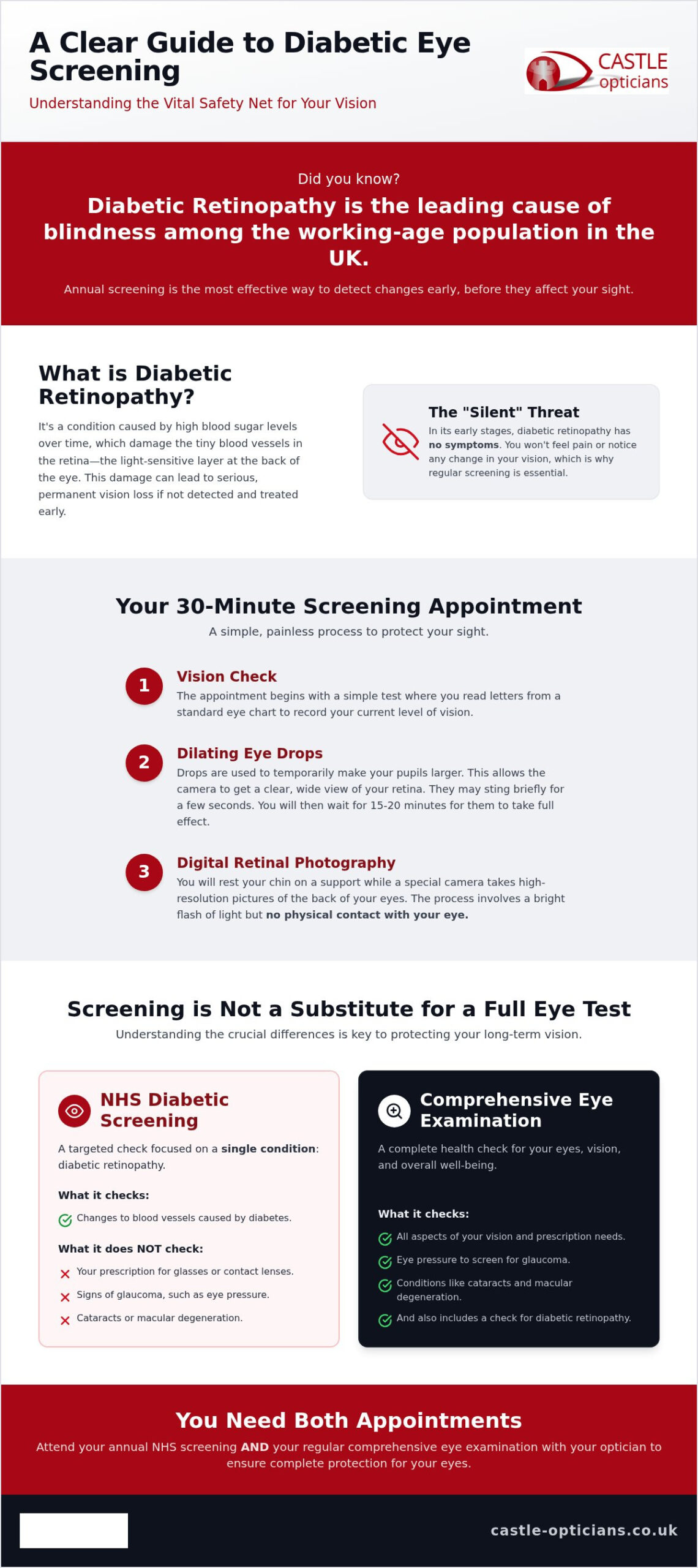
The session begins with a simple vision check. You’ll be asked to read letters from a standard chart, similar to what you’ve experienced during a regular eye examination. Next comes the most talked-about part: the dilating eye drops. These drops are essential because they make your pupils larger, allowing the camera to see the full extent of your retina. When the drops are first applied, you might feel a sharp stinging sensation. Most patients describe it as being similar to getting a bit of soapy water in your eye. It’s brief, lasting only a few seconds, but it’s a vital step for an accurate NHS diabetic eye screening.
Once your pupils have widened, which usually takes about 15 to 20 minutes, you’ll be guided to the digital camera. You simply rest your chin on a support and look at a target light. There is no physical contact with your eye during the photography. The camera uses a bright flash to capture high-resolution images of the fundus, which is the back surface of your eye. The process is quick, and the photographer will ensure they have clear images of both eyes before you leave.
Managing the After-Effects of Dilating Drops
Managing your schedule around diabetic eye screening Essex requires a little planning. The dilating drops have a temporary impact on your sight. Your vision will likely be blurred for 4 to 6 hours after the appointment. This happens because the drops prevent your eyes from focusing properly on close-up objects. You’ll also find that everything looks much brighter than usual. Bringing a pair of sunglasses to your Essex clinic is a practical way to manage this light sensitivity and make your journey home more comfortable.
Safety is the priority here. Because of the blurred vision and light sensitivity, you must not drive to or from your appointment. It’s best to arrange for a friend or family member to collect you, or use public transport. If you have concerns about how these drops might interact with your daily routine, or if you want to discuss your results in the context of your wider vision, a comprehensive eye test at our practice can provide the extra time and detail you need.
Screening vs. Standard Eye Tests: Understanding the Crucial Differences
One of the most common misconceptions we encounter is the belief that attending your diabetic eye screening Essex appointment replaces the need for a regular eye examination. It’s an easy mistake to make. You’ve had your pupils dilated, photos taken, and received a letter saying your eyes are healthy. However, it’s vital to understand that the National Diabetic Eye Screening Programme is a “single-issue” service. It’s designed with the specific, narrow goal of identifying retinopathy. It doesn’t look for anything else.
Think of the screening as a specialist safety net. It’s incredibly effective at spotting early diabetic changes, but it doesn’t provide the holistic overview of your ocular health that comprehensive eye health checks in Essex offer. Relying solely on the screening programme is like checking your car’s tyre pressure but ignoring the engine. Both are important, but one doesn’t cover the other.
What the Screening Programme Misses
Because the screening technicians are focused purely on diabetic retinopathy, other sight-threatening conditions can easily go unnoticed. A standard screening does not typically include the detailed diagnostic checks required for a full clinical picture. During our examinations, we look for several issues that screening misses:
- Glaucoma detection: We check your internal eye pressure and examine the optic nerve. This is essential since glaucoma often has no early symptoms.
- Macular degeneration (AMD): Screening photos focus on the wider retina, but a clinical exam looks closely at the macula to ensure your central vision remains sharp.
- Refractive errors: Screening won’t tell you if your prescription has changed or if you need new lenses to reduce eye strain and improve clarity.
The Value of an Independent Optician in Rayleigh
Choosing an independent practice like Castle Opticians means you benefit from a level of continuity that a large-scale screening programme simply cannot match. You’ll see the same friendly, familiar faces who have been serving the community since 1989. This long-term relationship allows us to understand your specific history and notice subtle changes over several years. We take pride in being a trusted local expert for our neighbours in Rayleigh and Benfleet.
During a comprehensive eye test, we have the time to sit down and discuss any symptoms you’re experiencing, whether it’s dry eyes, headaches, or difficulty with night driving. Screening technicians are often working to a tight schedule and aren’t always able to provide clinical advice on these broader issues. By integrating your diabetic eye screening Essex results with our thorough examinations, we can build a complete picture of your vision and keep your eyes healthy for years to come.
How to Organise and Prepare for Your Essex Appointment
The invitation for your diabetic eye screening Essex appointment usually arrives by post. It’s sent by the Mid and South Essex Diabetic Eye Screening Programme, which is currently managed by InHealth Intelligence. This letter will specify a date, time, and location for your check. Whilst the system tries to allocate a centre near your home, you might find the suggested slot doesn’t fit your schedule or the location is difficult to reach. Taking a few minutes to prepare can make the entire experience much smoother and more comfortable.
Booking and Rearranging Locally
If the appointment on your letter isn’t suitable, you can change it quite easily. You have the option to use the MSEDESP online patient portal or call the Chelmsford-based administration team on 01245 806100. For residents in Rayleigh and South Benfleet, screening often takes place in local community clinics or nearby GP surgeries. If you’ve moved house or haven’t received an invitation in over 12 months, it’s a good idea to contact the screening service directly or speak with your GP to ensure your records are up to date. They’ll ensure you’re correctly registered on the national database.
Preparing for the “Blurred Vision” Window
Preparation is about more than just showing up on time. To help the screening staff get an accurate baseline of your vision, you should bring your most recent spectacles to the clinic. You’ll also need a list of any current medications, as this helps the clinical team understand your overall health profile. Having this information ready saves time and ensures your records are accurate.
Because the dilating drops will leave your vision blurry for several hours, you must organise your transport in advance. Driving yourself is not an option. Many of our patients in Rayleigh and Benfleet arrange for a friend to drop them off or use a local taxi service. It’s also wise to consider your plans for the rest of the day. If your job involves heavy screen work or driving, you’ll likely need the afternoon off to allow your eyes to return to normal. The effects typically wear off within six hours, but everyone reacts differently.
Don’t forget to pack these essentials for your visit:
- A pair of dark sunglasses to manage light sensitivity after the drops.
- Your current prescription glasses and any contact lens cases.
- A printed list of your current medications.
- Your invitation letter or NHS number for quick check-in.
Once you’ve completed your screening, we’re here to help you understand how those results fit into your wider eye health. If you’re due for your regular check-up, book an eye test with our Rayleigh or Benfleet team today.
Comprehensive Diabetic Eye Care at Castle Opticians
Managing diabetes requires a dedicated team, and we’re proud to act as your trusted partners in vision health. Whilst your annual diabetic eye screening Essex appointment provides a necessary baseline for detecting retinopathy, our role as independent opticians is to provide the clinical support and personal attention that surrounds it. We’ve been a part of the Rayleigh and South Benfleet communities since 1989, building long-term relationships based on trust, expertise, and a genuine interest in our patients’ well-being. We don’t just see a set of results; we see a neighbour who deserves the best possible care.
Our independent status is what sets us apart from high-street chains. It means we aren’t bound by corporate time slots or “one-size-fits-all” approaches. When you visit us, we take the time to listen to your concerns and conduct a thorough examination that looks at every aspect of your ocular health. This unhurried pace allows us to explain our findings clearly, ensuring you leave our practice feeling informed and reassured about your vision. We believe that a calm, welcoming environment is essential, especially for those who may feel anxious about clinical procedures or the potential impact of diabetes on their sight.
The Benefits of Independent Care
Choosing an independent practice means you benefit from a level of continuity that’s hard to find elsewhere. You’ll often see the same friendly face at every visit, allowing us to track subtle changes in your eye health over many years. This is particularly important for diabetic patients, where consistency in monitoring is key. We also provide expert advice on lens technologies specifically suited to your needs. Whether you require specialised coatings to reduce glare or high-definition lenses for sharper contrast, we’ll guide you through the options with patience and professional authority.
Health and style don’t have to be mutually exclusive. We take great pride in helping our patients find the perfect spectacle frames in Rayleigh, ensuring your eyewear feels as good as it looks. Our curated collection focuses on quality and variety, providing options that reflect your personality whilst offering the durability you need for daily life. It’s all part of our commitment to providing a service that’s as thorough as it is hospitable.
Next Steps for Your Vision
If you’ve recently attended your diabetic eye screening Essex appointment, now is the ideal time to book your comprehensive clinical check with us. This ensures that whilst the NHS monitors for retinopathy, we’re looking after everything else, from eye pressure to macular health. You can easily contact our Rayleigh or South Benfleet branches to discuss your needs or ask any questions about your diabetic eye health. We’re here to provide the clarity and support you need to protect your sight for the future. Your vision is our favourite priority.
Protecting Your Sight for the Years Ahead
Managing diabetes is a lifelong journey, and your vision is one of your most precious assets. Whilst the NHS diabetic eye screening Essex programme provides a vital safety net for early retinopathy detection, it’s only one part of a complete eye care plan. By understanding what to expect at your appointment and how to prepare for those temporary after-effects, you can approach your screening with confidence and clarity. It’s essential to remember that these specific checks are designed to catch one condition; they don’t replace the need for a full clinical overview of your ocular health.
True peace of mind comes from knowing your eyes are being monitored by experts who see you as an individual. At Castle Opticians, we’ve been providing this personalised clinical attention to our neighbours in Rayleigh and South Benfleet since 1989. As an independent, family-run practice, we offer the thorough, unhurried examinations that look for conditions like glaucoma and macular degeneration, ensuring nothing is left to chance. We take pride in being a trusted local face you can rely on for years to come.
Book Your Comprehensive Eye Health Check at Castle Opticians today to ensure your vision remains sharp and healthy. We’re here to support you with expert care and a friendly, welcoming environment every step of the way.
Frequently Asked Questions
Do I still need a regular eye test if I attend diabetic eye screening?
Yes, you absolutely need a regular eye examination alongside your screening. The NHS diabetic eye screening Essex programme is a specialised check that focuses solely on retinopathy. It doesn’t look for other conditions like glaucoma or cataracts, nor does it check if you need new glasses. Seeing an independent optician ensures your overall eye health and vision are fully managed.
Can I drive myself home after my diabetic eye screening in Essex?
No, you must not drive yourself home after your appointment. The dilating eye drops used during the screening will make your vision blurred for approximately four to six hours. They also make your eyes much more sensitive to bright light, which can make driving dangerous. It’s best to arrange a lift with a friend or use a local taxi service to ensure you get home safely.
Is the diabetic eye screening appointment free on the NHS?
Yes, diabetic eye screening is provided free of charge by the NHS. It’s a national standard for everyone with a diagnosis of Type 1 or Type 2 diabetes who is aged 12 and over. You’ll typically receive an invitation letter automatically once your GP has registered your diagnosis on the national database, ensuring you have access to this vital preventative care.
How long do the dilating eye drops last and do they hurt?
The dilating drops usually last between four and six hours. When they’re first applied, you might feel a brief stinging sensation, similar to getting a drop of soapy water in your eye, but this passes in a few seconds. Whilst your vision is blurred, you’ll also find that everything looks much brighter than usual, so bringing a pair of sunglasses to your appointment is very helpful.
What happens if the screening identifies a problem with my eyes?
If the screening identifies changes in your retina, you’ll be referred to a hospital eye clinic for further investigation. Most minor changes don’t require immediate treatment but need closer monitoring by a specialist. You and your GP should receive your results within three to six weeks of your appointment. If treatment is necessary, the hospital ophthalmology team will discuss the next steps with you.
Can I wear my contact lenses to the screening appointment?
You should not wear contact lenses during your screening appointment. The dilating drops can react with the lens material, so the technician will ask you to remove them before the test begins. It’s much easier to wear your glasses to the clinic instead. If you do wear lenses, remember to bring your storage case and solution so you can put them back in only once the drops have fully worn off.
How often should I have my eyes screened if I have diabetes?
Most people are screened every 12 months, though this frequency can change based on your results. As of 2026, the NHS has confirmed it’s safe for patients at very low risk of retinopathy to be screened every 24 months. Your invitation letter will specify when your next check is due based on your clinical history and the stability of your previous two screenings.
Where are the diabetic eye screening clinics located in South Essex?
In South Essex, the service is managed by InHealth Intelligence and delivered across various community settings. This includes local GP surgeries, community clinics, and hospitals throughout the Rayleigh and Benfleet area. When you receive your invitation for diabetic eye screening Essex, the letter will list the most convenient locations available for your specific appointment, and you can rearrange this if the venue is difficult to reach.