

You are halfway through a busy afternoon when it starts: a persistent, fluttering tug just below your eyebrow that simply won’t stop. It’s a sensation that’s as irritating as it’s distracting, often leading you to wonder why does my eye keep twitching and whether it signifies a serious neurological issue. If you’ve found yourself staring into the mirror or rubbing your eyelid in frustration, you’re certainly not alone. Most of us have experienced this involuntary spasm, often whilst staring at a digital screen or during a particularly demanding week.
We understand how unsettling this can feel, especially when you’re already dealing with the strain of long working hours. It’s perfectly natural to worry when your body behaves in a way you can’t control. This article helps you discover why eyelid twitches happen, how to manage them at home, and when it’s time to visit our experts in Rayleigh or Benfleet for a professional check-up. We’ll explore the common lifestyle triggers behind these spasms and provide practical tips for immediate relief. By the end, you’ll know exactly when a professional consultation is necessary to ensure your eyes are healthy and your mind is at ease.
Key Takeaways
- Understand that most eyelid twitches, known as myokymia, are harmless muscle spasms that feel far more prominent to you than they appear to others.
- Identify the common lifestyle triggers behind why does my eye keep twitching, ranging from high stress levels to the effects of modern digital eye strain.
- Learn how to manage mild symptoms at home by improving your sleep hygiene and adjusting your daily screen habits.
- Recognise the specific “red flag” symptoms, such as persistent swelling or vision changes, that require a professional clinical assessment.
- Discover how a personalised, unhurried eye test at our Rayleigh or Benfleet centres can provide a vital “vision reset” for your long-term comfort.
Understanding Eyelid Twitches: What is Myokymia?
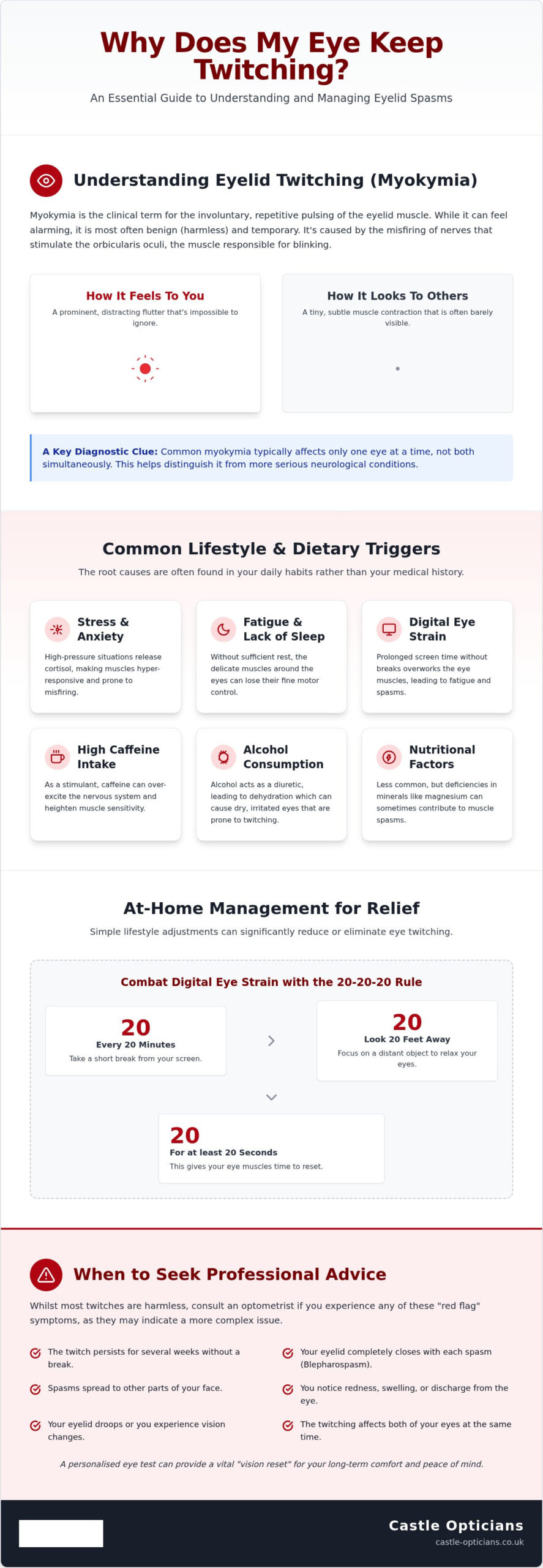
If you’ve spent the morning wondering why does my eye keep twitching, you’re experiencing a phenomenon known clinically as myokymia. This is the involuntary, repetitive pulsing of the eyelid muscle, and it’s one of the most frequent minor eye complaints we encounter at our practices. It’s a curious sensation that can feel like a miniature earthquake on your face. However, there’s a significant gap between how it feels and how it looks. Whilst it feels prominent and distracting to you, it’s often barely visible to others, even during a close conversation.
We want to reassure you that most of these twitches are “benign”, which is the medical way of saying they’re harmless and not a symptom of a deeper disease. They’re usually temporary, lasting anywhere from a few seconds to several days amongst most people. For some, the twitch might disappear for an hour only to return when they sit back down at their desk. Learning more about why does my eye keep twitching can help reduce the anxiety that often makes the spasm worse, as stress itself is a primary driver of the condition.
The Science Behind the Spasm
The primary muscle involved in this fluttering is the orbicularis oculi. This is the circular muscle that surrounds your eye and allows you to blink and squint. A twitch occurs when the nerves responsible for stimulating this muscle begin misfiring. This sends a series of rapid, involuntary signals that cause the muscle fibres to contract. Eyelid myokymia is a localised muscle fasciculation often triggered by external stressors like excessive screen time or lack of sleep. Because the skin around the eye is so thin and the muscle is so close to the surface, these tiny contractions feel much more intense than a similar twitch in your leg or arm might.
Is it Always Just One Eye?
One of the defining characteristics of common myokymia is that it typically affects only one eye at a time. It doesn’t usually strike both eyes simultaneously. You might find that the sensation migrates; it might start in the lower lid and then move to the upper lid later in the day. This unilateral behaviour is a helpful diagnostic clue. It helps us distinguish it from more complex conditions like Blepharospasm, which tends to be bilateral and can cause the eyelids to close completely. If your twitch is restricted to one side and feels more like a gentle pulse than a forceful closure, it’s likely the common variety that responds well to a bit of rest and a “vision reset” from our expert team.
Common Triggers: Why Does Your Eye Twitch?
Understanding why does my eye keep twitching often requires a closer look at your daily routine rather than your medical history. While the physiology involves nerve misfiring, the triggers are almost always rooted in lifestyle factors. Stress and anxiety are the most significant culprits. When you’re under pressure, your body releases cortisol, which can cause muscles to become hyper-responsive. Fatigue also plays a massive role. Without enough sleep, the delicate muscles around the eyes lose their fine motor control, leading to those familiar, rhythmic tugs that can last for hours.
Nutritional factors can sometimes contribute, though they’re less common than lifestyle triggers. Low levels of magnesium, for example, can lead to muscle spasms throughout the body, including the eyelids. According to the National Eye Institute, maintaining a balanced diet and staying hydrated are essential for ocular muscle health. If your twitch is accompanied by general eye fatigue, it might be time for a “vision reset” through a comprehensive eye test at our Rayleigh or South Benfleet branches.
The Caffeine and Alcohol Connection
Caffeine is a stimulant that over-excites the nervous system. High intake of coffee, tea, or energy drinks increases your heart rate and heightens muscle sensitivity, making a twitch more likely to occur. Alcohol has a different but equally disruptive effect. It acts as a diuretic, leading to dehydration. This can cause the eyes to become dry and irritated, triggering the eyelid to spasm in response. A simple practical tip is to swap your afternoon coffee for water or herbal tea for a few days to see if the frequency of the twitching subsides whilst your body rehydrates.
Stress Management for Eye Health
When you enter “fight or flight” mode due to chronic stress, your facial muscles can remain in a state of high tension. This constant readiness makes the orbicularis oculi muscle prone to misfiring. To combat this, try simple relaxation techniques like the 20-20-20 rule. Every 20 minutes, look at something 20 feet away for at least 20 seconds. This provides a mental break and allows your eye muscles to relax. Prioritising seven to eight hours of sleep is equally vital, as this is the only time your ocular muscles can fully recover from the day’s demands.
Digital Eye Strain and Modern Vision Habits
Modern life is lived through screens, and this shift has a profound impact on our ocular health. If you are asking why does my eye keep twitching after a long day at the office, the answer likely lies in Computer Vision Syndrome. This condition, often referred to as digital eye strain, occurs when the eyes are forced to focus on pixels for hours on end without adequate rest. Unlike reading a physical book, digital screens have less contrast and often produce glare, which forces your internal eye muscles to work significantly harder to maintain a clear image.
One of the primary physiological changes during screen time is a dramatically reduced blink rate. Normally, we blink about 15 to 20 times per minute, but this drops by up to 66% when we use digital devices. This lack of movement leads to surface dryness and muscle fatigue, both of which are common causes of eye twitching that we see in our daily clinics. Using an outdated prescription makes the situation worse, as your eyes must constantly over-compensate. Investing in the right lenses is essential to reduce this unnecessary mechanical strain. In many Rayleigh or Benfleet office settings, poor overhead lighting and screen glare only compound the issue, leaving your eyelid muscles in a state of chronic over-exertion.
The Impact of Dry Eyes
When the surface of your eye becomes dry, it creates a gritty sensation that the brain interprets as irritation. In response, the eyelid may twitch as a protective reflex, attempting to spread tears across the cornea. This is particularly common in environments with heavy air conditioning or central heating, which strip moisture from the air. If you find the fluttering persists, a comprehensive eye health check in Essex can help determine if you are suffering from underlying dry eye syndrome rather than just simple fatigue.
Blue Light and Bright Environments
Sensitivity to bright light, known as photophobia, can also trigger involuntary squinting and subsequent muscle spasms. Digital eye strain affects up to 50% of computer users, often manifesting as muscle fatigue that leads to that annoying eyelid flutter. Modern lens coatings designed to manage glare and filter blue light can provide significant relief, making your working day much more comfortable. By addressing these environmental factors and ensuring your workspace is correctly lit, you can often resolve the twitch without further intervention.
When a Twitch Becomes a Concern: Red Flags
Whilst most eyelid flutters are temporary and resolve with a little rest, there are moments when the body’s “early warning system” requires a professional response. If you’ve been wondering why does my eye keep twitching for several days, it’s helpful to look for specific red flags that distinguish a simple spasm from a more complex condition. While common myokymia is harmless, other issues require a clinical eye to ensure your long-term health. You should seek advice if you notice any of the following symptoms:
- The twitching is forceful enough to cause your eyelid to close completely.
- The spasm spreads to other parts of your face, such as your cheek or the corner of your mouth.
- Your eye becomes visibly red, swollen, or develops an unusual discharge.
- Your upper eyelid begins to droop or feels heavy.
- Your vision becomes blurred or distorted whilst the twitching occurs.
It’s important to distinguish common myokymia from Benign Essential Blepharospasm. The latter is a less common neurological condition that usually affects both eyes and involves more forceful, chronic blinking. Another condition to be aware of is Hemifacial Spasm. This typically involves the muscles on just one side of the face and can be more persistent than a standard eye twitch. An optician is often the best first step in these scenarios. We can rule out vision-related strain, surface irritation, or an incorrect prescription that might be triggering the muscle’s behaviour.
The 2-Week Rule
We generally advise our patients in Rayleigh and South Benfleet to follow the two-week rule. If your twitch persists for more than 14 days despite improving your sleep and reducing stimulants, it’s time for a professional opinion. Persistent spasms often indicate that your ocular muscles are over-compensating for a subtle change in your vision. Our team at Castle Opticians provides a comprehensive eye test in Essex to investigate these issues and ensure your eyes are working efficiently without unnecessary strain.
GP or Optician: Where to Go First?
Knowing which expert to visit can save you significant time and worry. If the eye itself feels painful, looks red, or your vision has changed, an optician is the specialist you need. We have the advanced diagnostic equipment required to examine the ocular surface and internal structures in detail. However, if the twitching involves other parts of your body or face, a visit to your GP is the correct path to rule out systemic neurological factors. Our Rayleigh and Benfleet teams are deeply integrated into the local healthcare fabric and can provide a formal referral if our assessment suggests you need further medical investigation. If you are worried about your symptoms, you can book an eye test with our friendly, local experts for peace of mind.
How Castle Opticians Can Help Restore Your Comfort
When you’re struggling with the persistent annoyance of an eyelid flutter, a standard sight test might not feel like enough. At Castle Opticians, our approach as an independent practice allows us to offer a more thorough, unhurried consultation that looks specifically at the health of your eye muscles and the surface of the eye. We understand that the question of why does my eye keep twitching often requires more than just a quick check of your distance vision; it requires a detailed assessment of how your eyes work together throughout the day.
Our expert team takes the time to look beyond the letters on a chart. We use advanced diagnostic tools to examine the tear film and the health of the orbicularis oculi muscle. By identifying subtle imbalances in how your eyes focus, we can determine if your twitch is a result of hidden muscle strain. This level of personalised care is a hallmark of our service in Rayleigh and South Benfleet, where we’ve been supporting the ocular health of our local community since 1989. We believe that every visitor deserves a bespoke solution that addresses their specific lifestyle needs, rather than a one-size-fits-all corporate approach.
Tailored Solutions for Rayleigh and Benfleet Residents
One of the most effective ways to resolve a chronic twitch is through high-quality, personalised lens technology. If your eyes are working too hard to compensate for glare or a slight misalignment, the resulting fatigue often manifests as a spasm. We specialise in finding the right balance for office workers and digital users across Essex. By selecting the correct spectacle frames in Rayleigh, we ensure that your lenses are positioned perfectly in front of your pupils. This precision reduces the mechanical load on your eye muscles, allowing them to relax and recover from the “fight or flight” tension discussed earlier.
Booking Your Appointment
If you’re ready to put an end to the frustration and find out why does my eye keep twitching, visiting our friendly team is the next logical step. We’ve designed our practices in Rayleigh and South Benfleet to be welcoming spaces where you can discuss your concerns without feeling rushed. We are proud to offer both NHS and private eye examinations, ensuring that professional eye care is accessible to everyone in our community. Whether you’re a long-term patient or visiting us for the first time, we’re here to provide the clarity and reassurance you need.
To arrange your consultation, simply call our local branches or stop by to speak with our staff. We’ll find a time that suits your schedule and ensures you receive a comprehensive check-up. We look forward to welcoming you and helping you achieve lasting visual comfort.
Take Action for Your Visual Comfort
Whilst the fluttering sensation of an eyelid spasm is rarely a cause for medical alarm, it serves as a valuable reminder to listen to your body’s needs. We’ve explored how common triggers like digital eye strain, caffeine, and stress answer the question of why does my eye keep twitching, providing you with practical steps to manage these symptoms at home. If a twitch persists beyond two weeks or is accompanied by redness or vision changes, a professional assessment is the best way to ensure your ocular health remains on track.
As independent eye care specialists serving the Essex community since 1989, our expert teams at the Rayleigh and South Benfleet branches are dedicated to providing personalised, unhurried care. Whether you’re an NHS or private patient, we’re here to help you find the right lens solutions to reduce muscle fatigue and restore your comfort. Don’t let a minor irritation become a long-term distraction. Book your comprehensive eye test at Castle Opticians today and give your eyes the professional attention they deserve. We look forward to seeing you soon and helping you achieve total peace of mind.
Frequently Asked Questions
Is an eye twitch a sign of a stroke?
An isolated eyelid twitch is extremely rarely a sign of a stroke. Strokes typically present with more severe symptoms, such as facial drooping, weakness in one side of the body, or difficulty speaking. If you are only experiencing a fluttering eyelid without these other neurological signs, it is likely a harmless case of myokymia. However, if you feel unwell or notice sudden facial numbness, you should seek immediate medical help.
How long does a typical eyelid twitch last?
Most eyelid twitches last from a few seconds to a few minutes and occur intermittently throughout the day. In some cases, the sensation can persist for several days or even weeks amongst those experiencing high stress or fatigue. Whilst these longer episodes are frustrating, they are usually harmless. If the spasm continues for more than two weeks despite resting, we recommend visiting our Rayleigh or Benfleet branches for a clinical assessment.
Can lack of magnesium cause my eye to twitch?
Yes, a deficiency in magnesium can lead to muscle spasms, including the delicate muscles around your eyes. Magnesium plays a vital role in regulating nerve impulses and muscle contractions. Whilst lifestyle factors like caffeine are more common culprits, ensuring you have a balanced diet can help. If you suspect a nutritional deficiency is the reason why does my eye keep twitching, it is a good idea to discuss your diet with a healthcare professional.
What is the best way to stop an eye twitch instantly?
There isn’t a guaranteed “instant” cure, but applying a warm compress to the affected eye can often soothe the muscle and provide temporary relief. Gently massaging the eyelid may also help the spasm to subside. The most effective long-term solution is addressing the root cause, such as reducing screen time or catching up on sleep. Taking a break from digital devices whilst following the 20-20-20 rule can also reduce immediate strain.
Who qualifies for an NHS eye test in Rayleigh or Benfleet?
You qualify for a free NHS eye test at our South Essex practices if you are aged 60 or over, under 16, or under 19 in full-time education. Eligibility also extends to those with diabetes, glaucoma, or a direct relative with glaucoma over age 40. Residents receiving specific benefits like Universal Credit or those registered as partially sighted are also covered. Our friendly teams in Rayleigh and Benfleet can confirm your eligibility when you book.
Can an outdated glasses prescription cause eye twitching?
Yes, wearing an outdated prescription is a very common trigger for eyelid spasms. When your lenses no longer provide the correct correction, your internal eye muscles must work significantly harder to focus. This chronic over-exertion leads to muscle fatigue and involuntary twitching. A fresh eye test at Castle Opticians can determine if a new prescription or specialised lens coatings are needed to support your vision and eliminate these irritating tremors that disrupt your daily comfort.
Does stress really make my eyelid move on its own?
Stress is the primary neurological trigger for eyelid myokymia. When you’re stressed, your body produces chemicals like adrenaline and cortisol that heighten muscle sensitivity. This “fight or flight” state can cause the nerves controlling your eyelid to misfire, leading to involuntary movements. Managing your stress levels through regular breaks and improved sleep hygiene is often the most effective way to stop the twitching and protect your long-term ocular health from the effects of fatigue.
When should I be worried about an eye twitch?
You should seek professional advice if the twitching persists for more than two weeks or if the spasm spreads to other facial muscles. Other red flags include the eyelid closing completely, visible redness, swelling, or any sudden changes in your vision. If you notice these symptoms, our independent experts in Rayleigh and South Benfleet can perform a thorough examination to rule out more complex conditions and ensure your peace of mind with a personalised care plan.